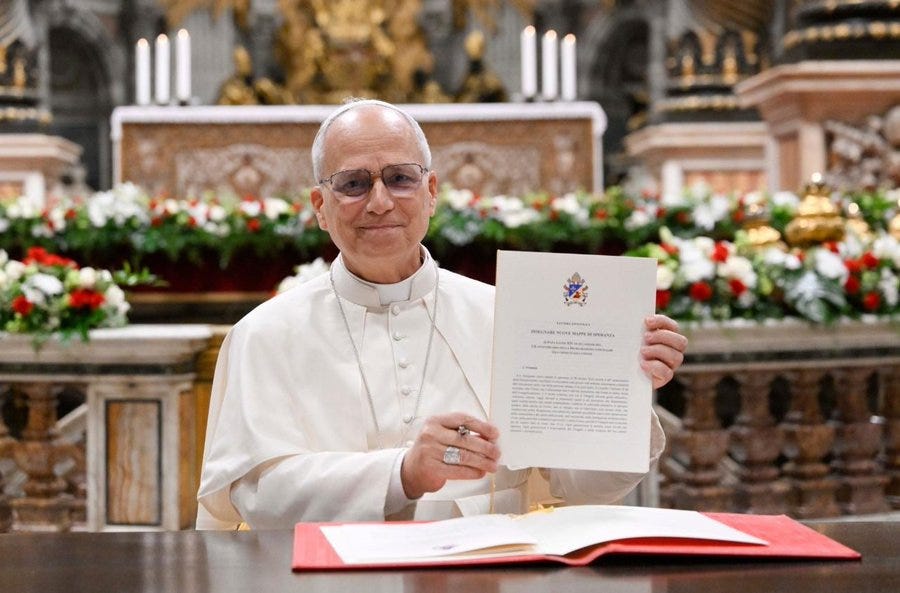
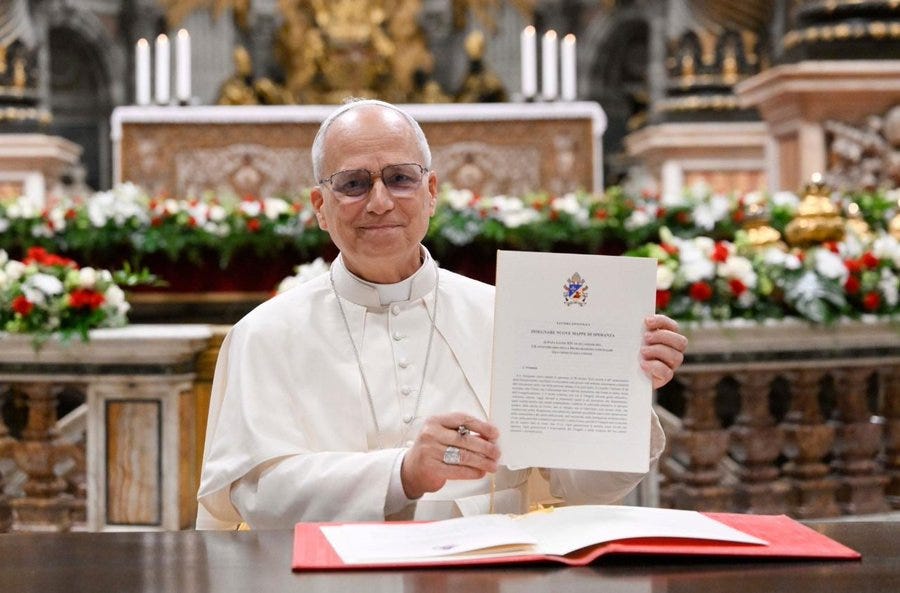
The first encyclical from Pope Leo XIV will be presented by the pontiff himself on May 25, with a full roster of clerical and lay speakers joining him in launching the text.
“Magnifica Humanitas, on the protection of the human person in the age of artificial intelligence,” is due to be published next Monday, after much anticipation regarding Leo’s first encyclical. Traditionally, the first such encyclical from a new pope is a key indication of his own papal priorities, and in this regard it seems that Leo is indeed following suit.
Addressing the College of Cardinals on May 10 last year, Leo explained the reason for his papal name was chiefly “because Pope Leo XIII in his historic Encyclical Rerum Novarum addressed the social question in the context of the first great industrial revolution.”

For Leo, the Church today “offers to everyone the treasury of her social teaching in response to another industrial revolution and to developments in the field of artificial intelligence (AI) that pose new challenges for the defence of human dignity, justice and labour.”
As such, it is quite deliberate that Leo signed Magnifica Humanitas on May 15, the 135 anniversary of his namesake’s encyclical Rerum Novarum.
Notably, Leo will present his own encyclical in the Vatican’s Synod Hall, where he will be joined by a number of cardinals and lay theologians at the speakers chair. According to the Holy See Press Office, the list of speakers includes:
Cardinal Víctor Manuel Fernández: the Prefect of the Congregation for the Doctrine of the Faith;
Cardinal Michael Czerny, S.J.: the Prefect of the Dicastery for Promoting Integral Human Development;
Prof. Anna Rowlands: professor of Political Theology, including the Social Doctrine of the Church, and theological ethics of human migration in the Department of Theology and Religion at Durham University, and a vocal lay Synod on Synodality theologian;
Christopher Olah: the co-founder of American AI company Anthropic and head of research on the interpretability of artificial intelligence;
Dr. Leocadie Lushombo: professor of Political Theology and Catholic Social Thought, Jesuit School of Theology / Santa Clara University, California.
Certainly Leo has made the subject of AI one of the early aspects of his pontificate so far, warning in a number of speeches about the dangers it can pose. Given that the first encyclical of a new pope is viewed with great speculation, it is not difficult to anticipate certain themes which will be present.
“The Church wishes to contribute to a serene and informed discussion of these pressing questions by stressing above all the need to weigh the ramifications of AI in light of the ‘integral development of the human person and society’ (Note Antiqua et Nova, 6),” Leo told an AI conference in June. “This entails taking into account the well-being of the human person not only materially, but also intellectually and spiritually; it means safeguarding the inviolable dignity of each human person and respecting the cultural and spiritual riches and diversity of the world’s peoples. Ultimately, the benefits or risks of AI must be evaluated precisely according to this superior ethical criterion.”
In recent years the sudden spread of digitization and of artificial intelligence has been undeniable. For Leo, such a change “is more pervasive” even than the Industrial Revolution of Leo XIII’s era. “It heavily influences the way we think, altering our understanding of situations and how we perceive ourselves and others,” he told a Vatican conference last year, examining the link between AI, medicine and human dignity. “We currently interact with machines as if they were interlocutors, and thus become almost an extension of them. In this sense, we not only run the risk of losing sight of the faces of the people around us, but of forgetting how to recognize and cherish all that is truly human.”

The Pope is not opposed to such technological developments: he has opined that the advance of AI can be “transformative and beneficial” if properly used.
But he has also warned that “if AI is to serve human dignity and the effective provision of healthcare, we must ensure that it truly enhances both interpersonal relationships and the care provided.”
In a message sent in April to mark the Day for Catholic Universities, Leo commented that the rise of AI highlights that the “processes of knowledge cannot be reduced to the production of ever more powerful algorithms; on the contrary, they require an adequate level of human responsibility and ethical evaluation.”
“As Catholics, we can and must make our contribution so that people—especially young people—may acquire the capacity for critical thinking and grow in freedom of spirit,” he added.
Penning an Apostolic Letter in October last year, Leo stated how technology must be used in a proper manner. “Artificial intelligence and digital environments must be directed toward the protection of dignity, justice, and work; they must be governed by criteria of public ethics and participation; and they must be accompanied by theological and philosophical reflection that is up to the task,” he wrote.
Further details about the upcoming encyclical will be published in the forthcoming days.