Vatican Issues Detailed 2-year Plan for Implementation of Synod on Synodality
The new text from the Synod Secretariat outlines the local, national, and continental stages of the build up to the 2028 Synodal Assembly at the Vatican.
The Vatican’s Synod office issued guidelines today for the Church to follow in the build up to the Synodal Assembly being held in Rome in 2028, as part of the continuing process of the Synod on Synodality.
A new text from the General Secretariat of the Synod of Bishops on May 20 contains the official guidance of the Holy See regarding the next four stages of the overall implementation stage of the multi-year Synod which closed in 2024.
What is happening and when?
The 18-page document outlines the dates to be observed, the theme and style to be followed, and the multiple reports which must be composed at each stage. In its own words, the report describes the four stages as follows:
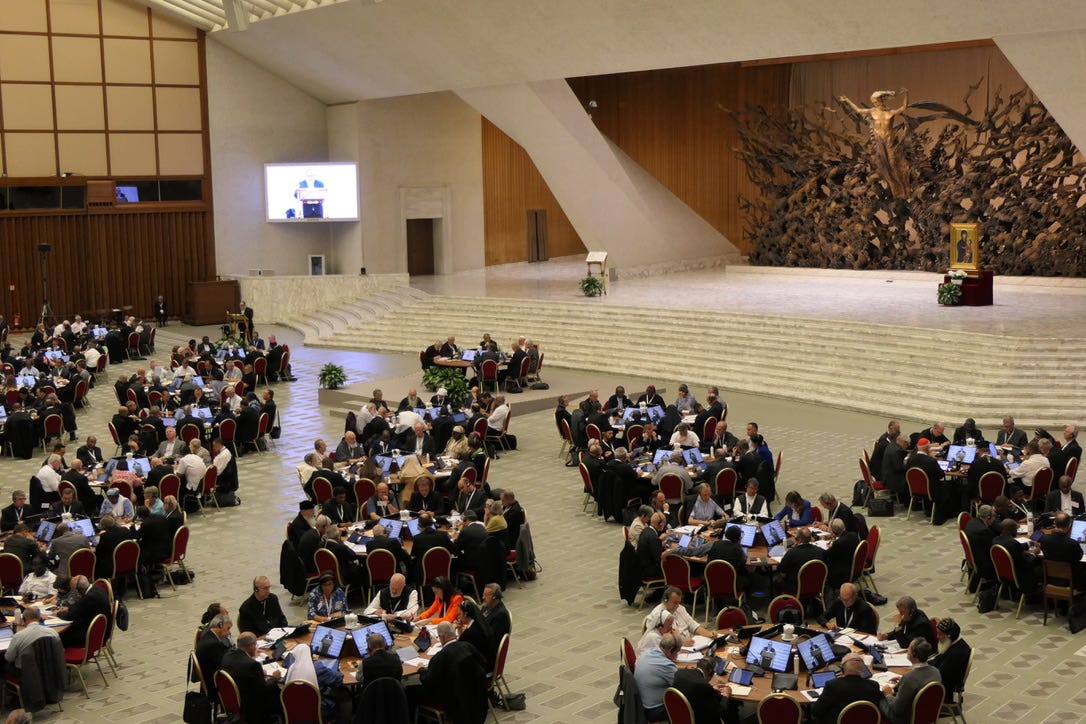
Recollecting — first semester of 2027. Evaluation Assemblies in Dioceses and Eparchies, called to reread the experience of implementing the Final Document through a narrative report and a letter to the other Churches.
Interpreting — second semester of 2027. Assemblies of Episcopal Conferences (national or regional), which will prepare a theological-pastoral report and a letter to the other local Churches.
Orienting — first four months of 2028. Continental Assemblies, from which a perspective report will emerge, capable of identifying shared priorities and orientations.
Celebrating — October 2028. Ecclesial Assembly of the Church as a whole, in the Vatican, together with the Holy Father: the journey undertaken will be brought into unity and entrusted to the discernment of the whole Church.

Hence there are three stages prior to the Synodal Assembly of October 2028, in a format resembling that of the Synod on Synodality as it worked through the diocesan, national, and continental phases. The General Secretariat of the Synod described each of the four stages as “a celebratory moment of assessment, synthesis, and above all renewed impetus for the Church’s synodal conversion.”
It was from his hospital room last spring that – according to the Synod Secretariat – Pope Francis approved the multi-year implementation phase and the 2028 Vatican Synodal Assembly.
Presenting the initial format for the implementation phase, the Synod Secretariat wrote last July that “the synodal method is not reduced to a series of meeting management techniques, but is a spiritual and ecclesial experience that implies growing in a new way of being Church, rooted in the faith that the Spirit bestows his gifts on all the Baptized, beginning with the sensus fidei.”
As per the latest instructions from the Secretariat on May 20, the entire affair over the next few years leading up to October 2028 is to be guided by the question:
“In light of the journey undertaken after the conclusion of the 2021-2024 Synod, and with a view to offering its fruits as a gift to the other Churches and to the Holy Father: what concrete form of a missionary synodal Church and what new paths of synodality are emerging in your community?”
New reports to be drafted
For the already synodal-fatigued, the above instruction from the Vatican will likely be an unwelcome one. In practical workload it appears to comprise a redoing of the Synod, albeit with slightly different themes.
The Secretariat has attempted to pre-empt such criticism, writing that it is “not a matter of repeating the Synod consultation, nor of adding further tasks to the ordinary life of communities, but rather of rereading what has already been experienced, recognizing its fruits and difficulties, and making the experience gained available within a logic of exchange of gifts among the Churches.”
However this does not align with their own instructions. The diocesan and national stages (the first two stages “recollecting” and “interpreting”) are tasked with producing two texts each: a narrative report from the diocesan assembly, a theological-pastoral report from the national assembly, and a “letter to other local churches” from both assemblies.
The latter of the two texts “constitutes the concrete instrument of the exchange of gifts: each community offers what it has brought to maturity and opens itself to receive what the other Churches offer in turn.” Both sets of documents must be sent to the Vatican by June 30, 2027 and December 31, 2027 respectively.

Come the time the continental assemblies take place in early 2028 the homework is different. The Secretariat tasks the continental assemblies to draw up, by April 30, 2028, a “perspective report that will contribute to the drafting of the Instrumentum laboris (working document) for the 2028 Ecclesial Assembly.”
The various local, national, and continental levels will examine some of the key themes of the Synod, including some of the more controversial such as:
Synodal liturgy
Lay leadership
Synodality and ecumenism
Synodal decision making in the Church
Synodality formation in seminaries
Lay formation in synodality
Cutting through the jargon — what is the implementation phase?
According to the Synod Secretariat, the new guidelines “are intended to help give more concrete form to the process already underway, by specifying the involvement of the local Churches and of the different spheres of ecclesial communion.”
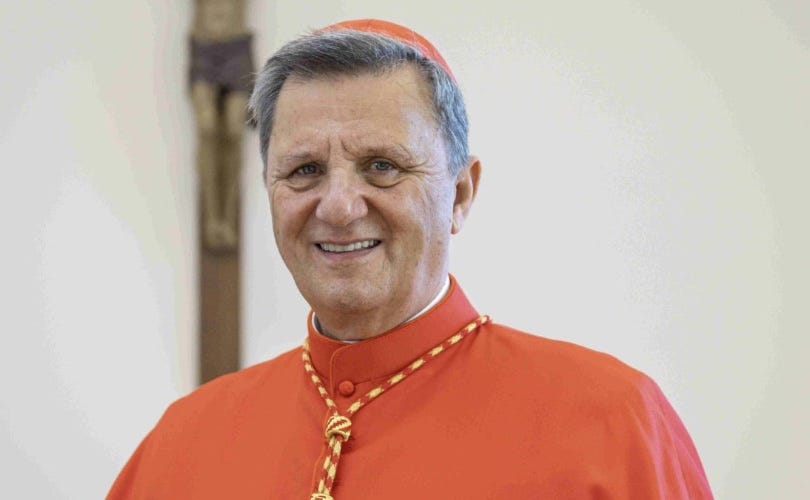
Cardinal Mario Grech, the Secretary General of the General Secretariat of the Synod, added how the upcoming Synodal implementation stages were to be “a time of shared discernment and thanksgiving, in which to reread together what the Spirit is causing to grow in the Church and to recognize the steps we are called to take.”
The Synod document further attests how the entire “implementation phase” of the Synod on Synodality “invites communities to experiment with more synodal practices and forms of ecclesial life, to assess their fruits, and to share them, within a dynamic of exchange among the Churches that nourishes communion and sustains mission.”
“What is at stake is not simply the continuity of a process, but its maturation,” the Secretariat stated.

Much emphasis was given during the Synod to “listening,” particularly to those individuals or groups described as being “on the margins,” such as LGBT individuals, people wishing to promote a female diaconate, or non-Catholics.
It appears that similar such methodology is to be followed in the next two years leading up to October 2028.
According to the Secretariat’s document, careful guidelines are given about who should be chosen to participate in the various local and national assemblies in order to ensure “the presence of persons who are familiar with the processes underway and who are capable of interpreting them theologically and pastorally.” In practice, this phrase translates to only selecting people who are thoroughly on board with the Synod ideology and theological bent.
Expanding on this, the Secretariat writes that “due attention should be given to the balance between men and women and among the different generations, to cultural and ecclesial diversity – including presbyters, deacons, consecrated women and men, members of associations, movements, and new communities, as well as faithful not belonging to organized structures – and to the presence of persons living situations of fragility or marginality.”
Parish priests should also be involved, the Secretariat states, before adding that “it is also important to value voices not directly traceable to ecclesial structures and, where appropriate, to provide for the participation of representatives of other Churches and Christian Communions or of other religions.”
Further details will emerge from the Secretariat at key stages throughout the next few years, but it seems that – aside from the already well publicized doctrinal concerns about the Synod – the Secretariat may well have difficulty in drumming up support for the affair.
Enthusiasm was notably waning even among Synod members by the end of the Vatican meetings in 2024, and since then it has been only largely championed by those most attached to the cause. Despite what the Synod states, today’s instruction is essentially a rehashing of the last number of years, and few bishops will be keen to add that to their workload.