

Citing actions by numerous recent popes and the “spiritual catastrophe” in the Church since the Second Vatican Council, a group of traditional Redemptorists have declared they reject the validity of every pope since the Council and have called for an “imperfect council” to determine a way forward for the Church.
The Congregation of the Sons of the Most Holy Redeemer (FSSR), also known as the Transalpine Redemptorists, have issued what the Vatican will see as an ultimatum likely leading to heavy penalties. On May 2, the community published a lengthy and detailed statement in which they addressed concerns about papal pronouncements and the validity of the popes themselves.
The weighty declaration stated that “the papal pretenders from Paul VI through Leo XIV have taught and acted in flagrant contradiction to the undoubtedly Catholic pre-Vatican II Popes.”
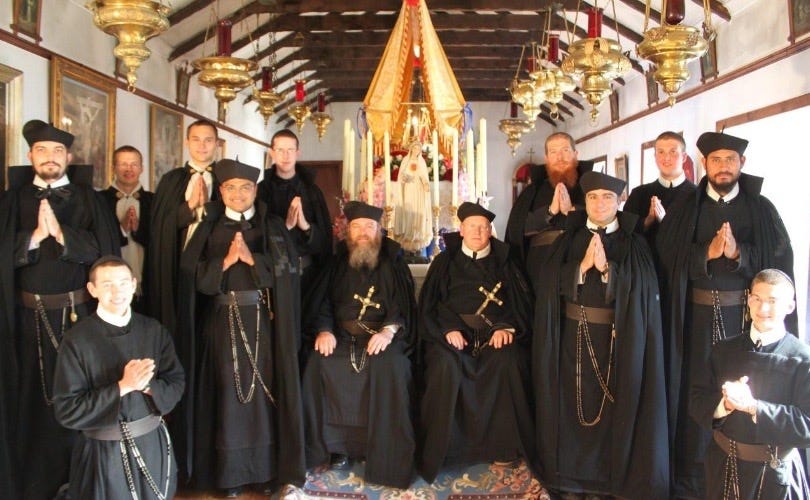
Furthermore, the FSSR argued that since Vatican II “the apparent Popes have caused a spiritual catastrophe of the greatest imaginable proportions.” The decision since Vatican II in “doctrinal, moral, liturgical, and disciplinary” concerns must be rejected, the FSSR attested, “because they contradict what came before.”
The community added that “accepting the false teaching of Vatican II separates us from the Catholic Church. A Catholic cannot recognise a man as the Vicar of Christ and resist his teachings in matters of Faith and Morals, nor can he resist his commands in matters of discipline and liturgy.”
Formed just under 40 years ago, the community was originally part of the Society of Saint Pius X. After Benedict XVI issued his Motu Proprio Summorum Pontificum, the community sought and was accepted into full communion with the Holy See in 2008. Warmly welcoming the news at the time, the community’s superior Fr. Michael Mary said that full communion was:
“a pearl of great price; a treasure hidden in the field; a sweetness that cannot be imagined by those who have not tasted it or who have not known it, now for many years. Its value cannot be fully expressed in earthly language and therefore we hope that all traditional priests who have not yet done so, will answer Pope Benedict’s call to enjoy the grace of peaceful and undisputed communion with him.”
But recent years have seen the community become increasingly disillusioned with a number of issues in the Church, including the COVID lockdowns and church closures and punitive measures against the congregation in New Zealand which saw the bishop of Christchurch evict them from the diocese over an investigation which the FSSR said had found no evidence of any canonical crime.
Indeed, well informed sources close to the community suggested to this correspondent that the FSSR’s very public opposition to the COVID-19 vaccine mandates at a time when the New Zealand bishops followed the official government mandates in that regard, was a key factor in their eviction from Christchurch. The FSSR became nationally famous for joining in protests against the injection mandates, being the sole religious community to do so in such a public manner.
In October, the community – based primarily on the Scottish island of Papa Stronsay – wrote expressing their believe they had been misguided to have hope for their position during Benedict’s papacy. “We have come to the unfortunate conclusion that the Traditional Catholic Faith, the Faith of all times and of the saints, is incompatible with the new, modern Church, the fruit of the Second Vatican Council,” they stated.
This prompted Bishop Gilbert of the Diocese of Aberdeen, in which they are incardinated, to write in response:
“The Diocese deeply regrets the tone, direction and key elements of this Letter. It is incompatible with the Catholic sense of the Church’s unity. While remaining open to conversation with the Congregation, the Diocese has made alternative arrangements for the ongoing provision of the older rite of the Roman Mass (usus antiquior) at St John’s, Fetternear.
The competent Dicasteries of the Holy See are also studying the situation and will provide canonical and doctrinal guidance. This is all an invitation to prayer for that unity of the Church so close to the Heart of Christ.”
Now, in their May 2 letter, the FSSR cite the influx of Freemasonry, papal indifferentism, and especially the pontificate of Pope Francis and his controversial documents. They rejected the possibility of what is known as the “recognize and resist” position, stating that “recognition of the destroyers of the Faith and any submission to them at all is both impossible and endangering one’s Faith.”
As such, the FSSR has called for what an “Imperfect General Council” to determine a way forward for the Church. This meeting would be for “all Catholic bishops of the world who have kept the true faith, to pronounce on the status of the present papal pretender, Leo XIV, and on the status of his Conciliar Church predecessors.”
Until such a council is concluded, “and until papal clarifications are issued,” the community states that they “cannot accept the current pretenders to the papacy from the time of the Second Vatican Council.”
“Our statement is new. Our perspective has changed. But our Faith has not changed,” they write. “Holding the True Faith of our Fathers, we will continue to offer the True Mass. We will worship the True God. And we will work for an Imperfect General Council to bring about the triumph of Christ’s One, Holy, Catholic and Apostolic Church.”
Vatican penalties are likely to be swift, especially given the precedent shown in recent years when the Congregation for the Doctrine of the Faith has moved quickly to pronounce excommunications against clerics who reject the Second Vatican Council.
Speaking to journalist Stephen Kokx on Monday, Fr. Michael Mary stated that as a result of the October letter he is already under “penal process” examining whether he is guilty of “heresy and schism.” The FSSR’s May 2 statement will likely bolster the Vatican’s case against him, although so far neither the Holy See nor the Diocese of Aberdeen have made any public response.
