The political, institutional and social state of our country is endlessly worsening. I deem it my role as head of the House of Bourbon and heir to the dynasty that made France to speak on the matter. It pains me to see my country be dragged deeper every day in an increasingly unsolvable political crisis where, once again, political parties and politicians, far from acting in the superior interest of France and therefore the French, prefer to play their own game. The Republic, true to its history, is subjected to partisan rationales. Although the constitution desired by general De Gaulle seemed to want to correct this fault, we are forced to admit that, fifty years later, this scourge that has made France suffer so much surges again with force.
Like many times in the past, the republican institutions and the political class are not up to the challenges of the day. The 5th Republic, like her sisters before her, seems to be on the brink of collapse.
Our country, once again, will find itself at the crossroads of its history. Once again a choice might offer itself. And even though these times are necessarily a source of worry or even suffering, they also carry hope. Indeed, it is in those moments that thanks to men of good will, thanks to those moved by a genuine care for the common good, great and good things can happen. Anybody who knows the history of France knows that, several times, we have known similar situations. It is therefore only up to us to seize these opportunities so that France may again find the path of her glorious destiny and of her happy prosperity, so indispensable for peoples to flourish.
I hope that the monarchist heritage of which I am the recipient is yet lively enough in the hearts of my countrymen to be a source of inspiration and, I repeat, hope. Stability, the long run, a vision over multiple generations, and heads of State who take care not to leave chaos to their successor are the things that ought to be put back at the center of French political life.
French people, let us not forget that it is in the shadow of the fleurs de lys that your liberties blossomed and that France knew its zenith. We need leaders who remember that the happiness of their peoples is their ultimate calling. May Saint Louis, the model for all heads of State, protect France and the French in these days of growing uncertainty.
---Louis de Bourbon, Duke of Anjou, October 2025
Any observer of the French Conservative scene will quickly pick up on the fact that there are several claimants to the throne. Louis, Duke of Anjou, who made the above comments is the flag carrier for the “Legitimists.” The other group – including the venerable organisation called Action Francaise – the “Orleanists,” are spearheaded by Jean, Count of Paris. Both are cousins of the House of Bourbon. Meanwhile, Jean Christophe, Prince Napoleon is heir to the Napoleonic (Bonapartist) claims to the French Imperial throne founded by Napoleon I in 1804, lost by him eleven years later, and recreated and reoccupied by his nephew Napoleon III (1852-1870). His mother, however, was a princess of the House of Bourbon of the Two Sicilies. The current King of Spain, Felipe VI is also a Bourbon; but the Carlists - the most Catholic political group in Spain – refuse to accept hm as King. Founded to uphold the rights of a now extinct branch, the ideological differences between the two branches ensure that the party would outlive its claimants. Many of them see the younger brother of the now deceased Duke of Parma as their standard bearer. His nephew now has the title of Duke of Parma, but one of his Bourbon Parma cousins is Grand Duke of Luxembourg. Lastly, there are two claimants to headship of the House of Bourbon Two Sicilies – the Dukes of Calabria and Castro – who both preside over parallel chivalric orders. Most notable of these is the Constantinian Order, both of whose version are quite prominent in certain American cities.
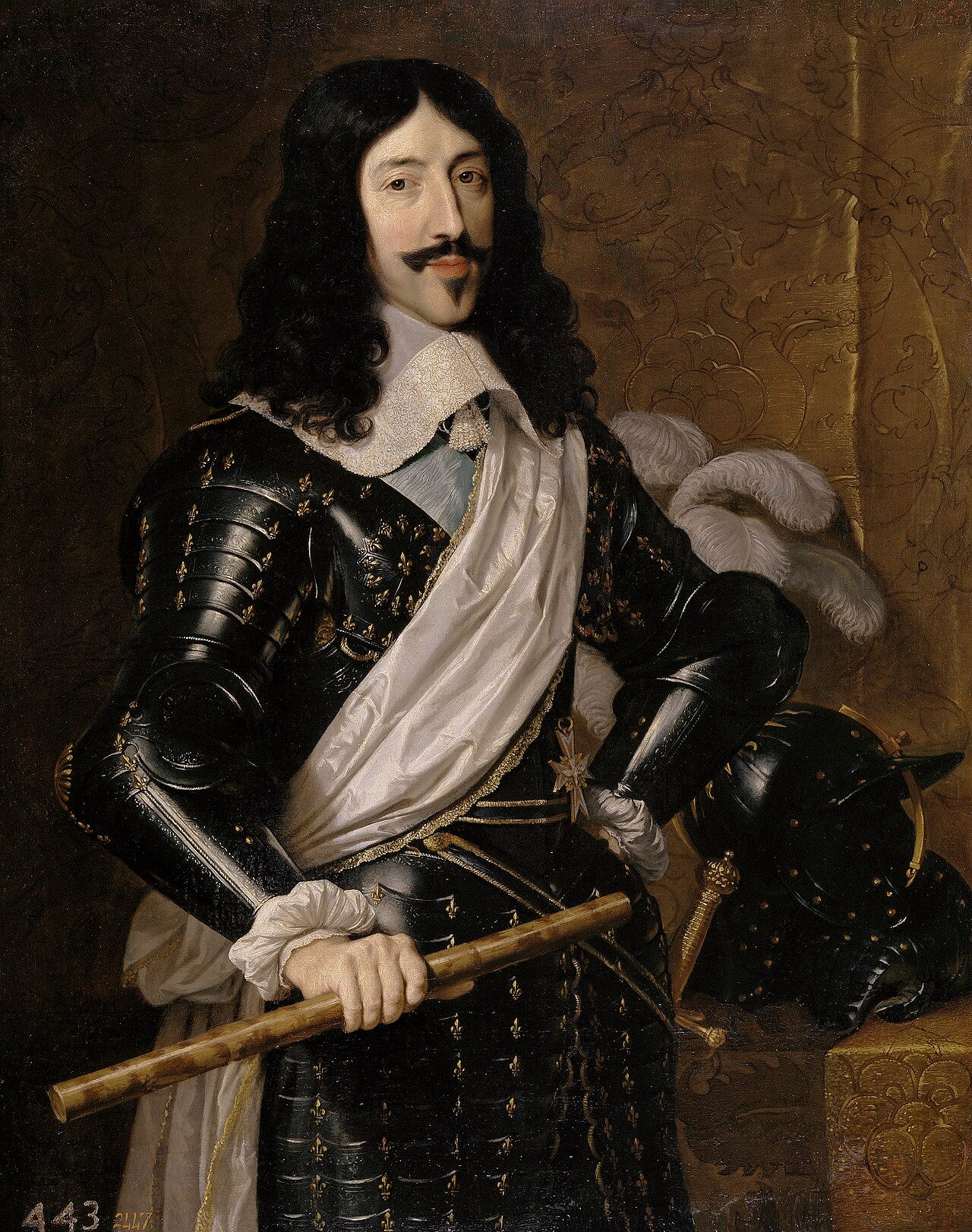
If this chaos makes one despair of understanding any of it, we’ll provide a bit of a guide through it all. Basically, almost all of the Bourbons alive to-day descend from Louis XIII (1601-1643), and his Habsburg wife, Anne of Austria (1601-1666). They had two sons – Louis XIV (1638-1715) and his brother, Philippe, Duke of Orleans (1640-1701). Philippe was the first Duke of Orleans, founder of the House of Bourbon Orleans, and direct ancestor of to-day’s Jean, Count of Paris. (Remember this branch of the Bourbons, we will come back to it.)
Louis XIV would marry Maria Teresa of Spain (1638-1683), sister of Carlos II (1661-1700), the last Habsburg King of Spain. Their oldest son, Louis, the Great Dauphin (1661-1711) would die before his father; so too would his oldest son, Louis, Duke of Burgundy (1682-1712). As a result, when Louis XIV finally died, the Duke of Burgundy’s oldest son would succeed him as Louis XV (1710-1774).
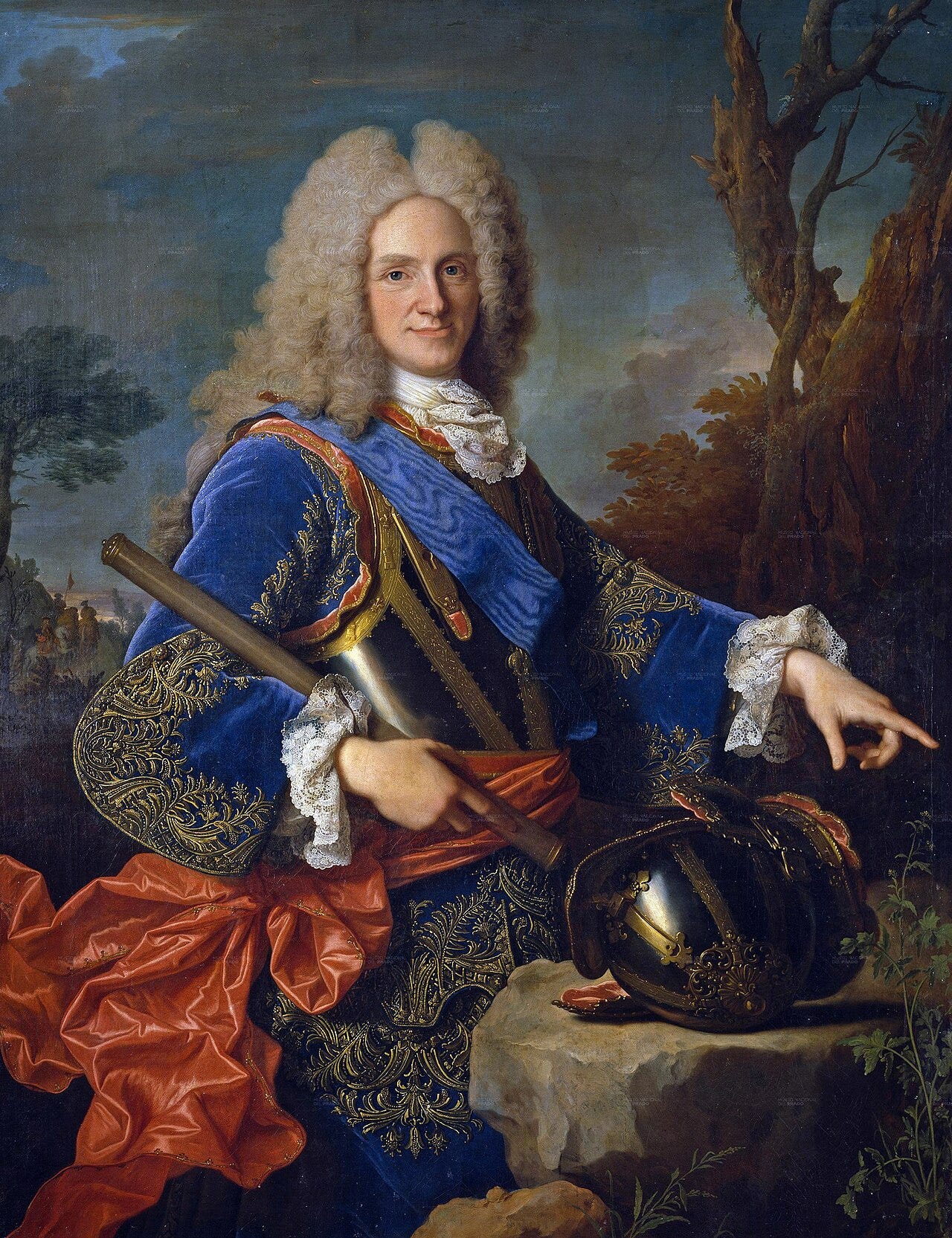
But before that, Carlos II died childless in 1700. His closest Habsburg cousin, Archduke Karl of the Austrian branch of the family, claimed the Spanish throne. But Louis XIV persuaded his dying cousin and brother-in-law to name Louis XIV’s grandson, the second son of the Great Dauphin and Carlos II’s great-nephew as his heir. He went to Spain and was hailed as King Felipe V (1683-1746), but began the War of Spanish Succession, or Queen Anne’s War as it was called in the Thirteen colonies. In 1713 he was accepted by the other European nations as King of Spain. But the Treaty of Utrecht which confirmed him as King of Spain also forbade any one man from becoming King of France and Spain simultaneously. But in any case, this was the beginning of the House of Bourbon Spain.
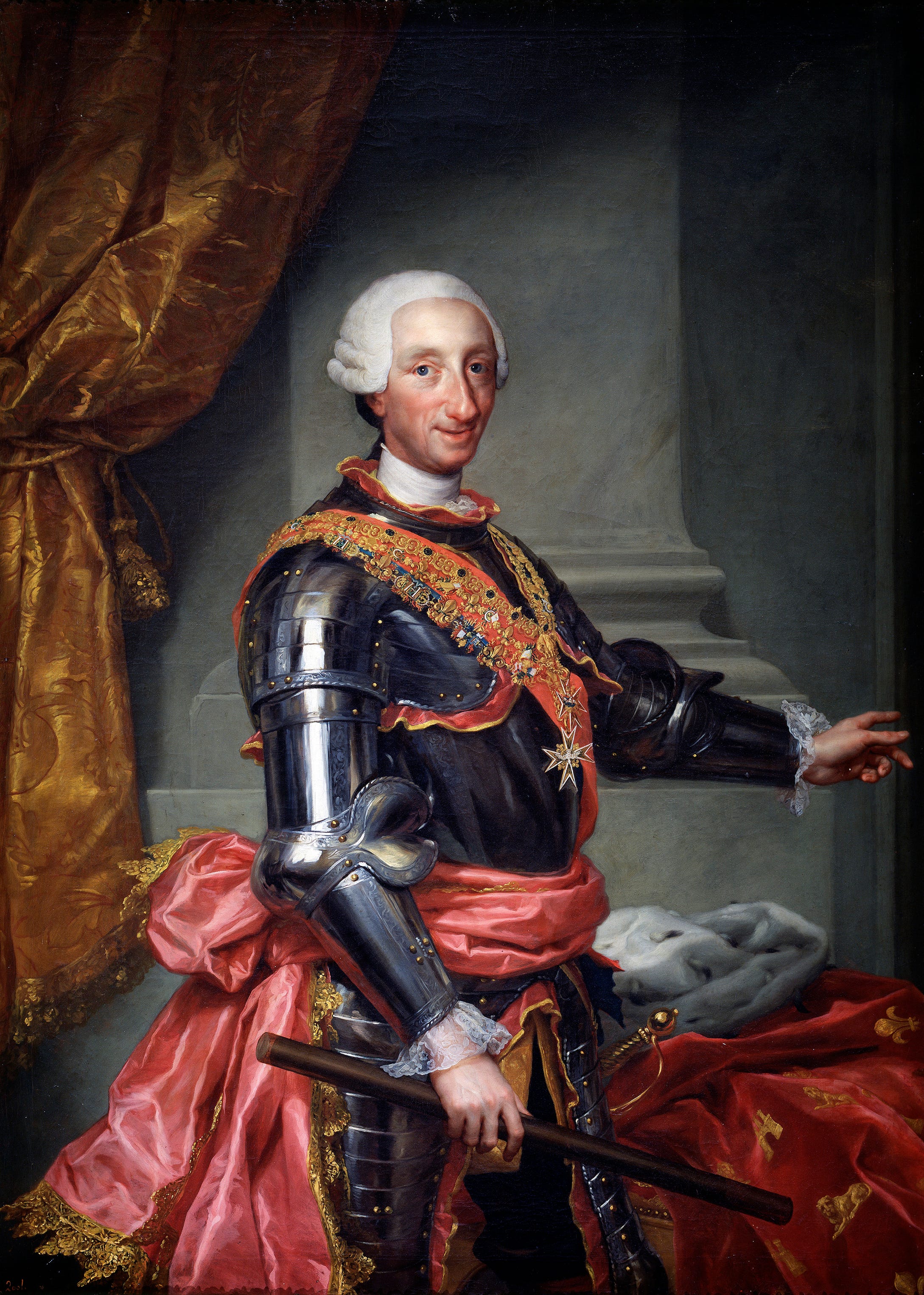
While his older son, Fernando (1713-1759), was being groomed to succeed him, his next son by his second wife, Elizabeth Farnese, Carlos (1716-1788), was carving out a separate future for himself. In 1731, his mother’s childless uncle, the last Farnese Duke of Parma died. She was able to get the Duchy to accept Carlos as the new Duke. But in 1735, he led the Spanish armies in Italy, and conquered the Kingdoms of Sicily and Naples. He then gave Parma to the Holy Roman Emperor. But he reconquered it in 1740, giving it to his younger brother, Felipe (1720-1765). Felipe was thus the founder of the branch of the family called Bourbon Parma. Meanwhile, in 1759, Carlos’ brother in Spain died without any children. Carlos succeeded him and named his older son Carlos (1748-1819) as Prince of Asturias, and renounced his Italian Crown in favour of his younger son Fernando (1751-1825) – he in turn founded the House of Bourbon Two Sicilies. Carlos III of Spain as he was now, went on to intervene in the American Revolution and founded the City of Los Angeles.
But in 1774, Louis XV died, and was succeeded by his grandson, Louis XVI (1754-1793). As we all know, the French Revolution claimed the lives Louis, his wife, and his son. When sanity was restored in 1815, his next oldest brother ascended the throne as Louis XVIII. At the same time, the Houses of Bourbon Spain, Bourbon Parma, and Bourbon Two Sicilies were restored to their respective thrones. Since Louis XVIII died childless in 1825, his and Louis XVI’s remaining brother became King Charles X of France (1757-1836). He had two sons – the Duke of Angoulême and the Duke of Berry. Although the older brother had no children, the younger one had a daughter; when his wife was pregnant, he himself was assassinated. But the child when born turned out to be a male – Henri, Count of Chambord (1820-1883).
Here comes a divide. King Charles X embraced Louis Philippe, Duke of Orleans (1773-1850) and head of the House of Bourbon Orleans (the branch we mentioned earlier, founded by the son of King Louis XIV’s younger brother) as a cousin and Prince of the Blood. In 1830, the Duke of Orleans repaid this kindness by having himself made “King of the French” by the revolutionaries, while King Charles and his family were forced into exile.
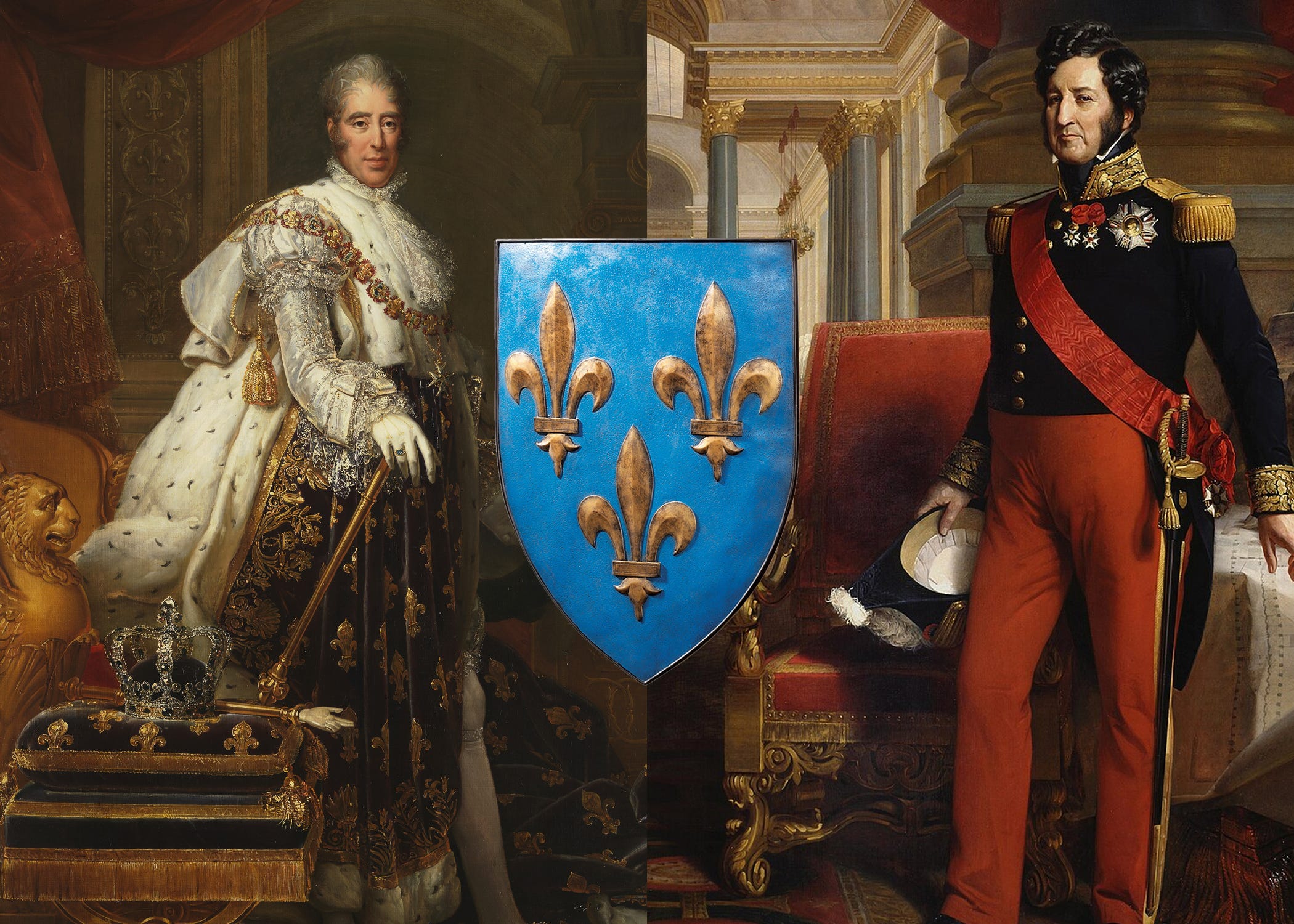
King Charles and his older son abdicated in favour of the Count of Chambord, and from this time on, French Royalists were divided between “Legitimists”, who supported a traditional, non-“democratic” Monarchy, and the “Orleanists,” who supported both the younger line and a British-style Monarchy. When Louis Philippe was overthrown himself in 1848, he too abdicated in favour of the grandson given him by the oldest son who predeceased him.