For most of the first century of the Church’s history, Christians went unnoticed by Roman society. Sure, there were localized bursts of persecution where Christians were brought to the attention of authorities (such as that under Nero in AD 66), but these was exceptions. Most inhabitants of the empire had never heard of Christianity and even fewer had any firsthand experience with it. Even the educated knew very little about the new movement.
By the early second century, however, Greco-Roman writers began to notice the existence of the new sect. We start to get passing references in works like Suetonius’s Lives of the Twelve Caesars or the Annals of Tacitus. What did early Romans think of Christianity? How did they situate it within what they knew of the religious landscape of the Mediterranean in the second century AD?
The earliest Roman comments on the Church are revealing. Roman knowledge of Christianity at this time was certainly superficial, yet beneath the misunderstandings lay a surprisingly accurate grasp of several essential aspects of Christian life. Historian of early Christian Robert Louis Wilken explains it thus:
These first [Roman] comments, though perfunctory and indifferent, and often based on hearsay, are significant, for they give us clues as to how Christianity was perceived at the time it was first coming into public view…Appearances, it is sometimes said, are deceiving. Knowledge based on what one sees and hears is thought to be superficial, for what one see and hears is never the sum of things. Yet is it not equally true that how something appears, how it is perceived by others, is an aspect of what it is?[1]
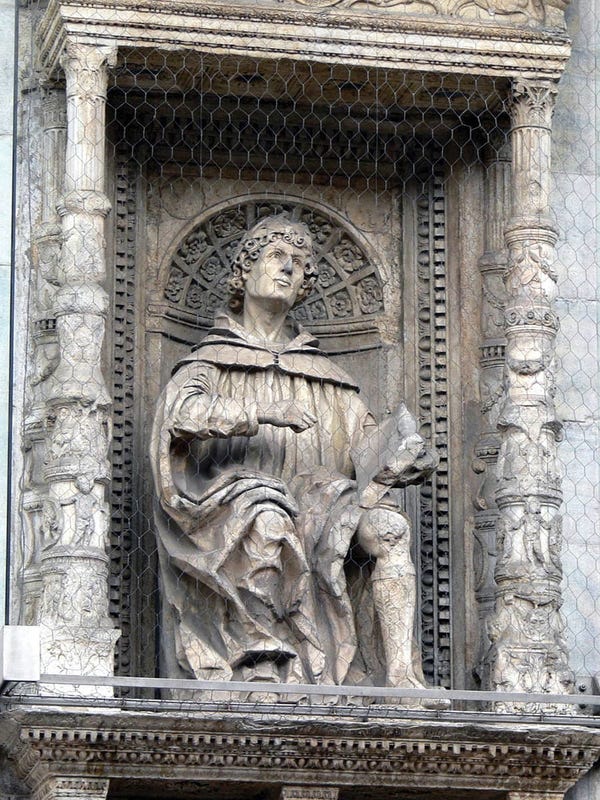
When Pliny the Younger wrote his famous letter to Emperor Trajan about Christianity in Bithynia in the year 112, Pliny tells the emperor that he had ordered the Christian community to cease gathering because “in accordance with your instructions, I had forbidden political associations.”[2] The phrase “political associations” is hetaeria, which means something like “club,” “association,” or “brotherhood.” The hetaeria was not an unusual institution in ancient Rome. They were fraternal associations organized around the trades and generally under the patronage of a certain god. Most members were drawn from the artisan classes and contributed to a common purse out of which they provided fraternal benefits to members. In this sense, they were not unlike the later medieval trade guilds.
These fraternal associations were not intrinsically political. For example, Pliny uses the word hetaeria to describe a fireman’s association in Nicomedia.[3] They nevertheless retained the potential to become political under the right conditions (students of latter Roman history will recall that politicized charioteering clubs almost brought down Emperor Justinian in the Nika riots of 532). Trajan feared the factionalism and unrest such organizations could foment and therefore banned any political organization. The empire thus allowed the hetaeria to carry on their business so long as they confined themselves to fraternal activities and kept far away from politics.

Pliny believed the Christians were some sort of new hetaeria that had become dangerously subversive to the political order. But why did Pliny make this connection? What was it about Christianity, as he understood it, that led Pliny to consider the Church as a kind of fraternal association? To answer that, we need to learn a bit more about the benefits that membership in a hetaeria conferred.
One of the most common services provided by the hetaeria was the burial and commemoration of deceased members. The statutes of an association from Lanuvium during the reign of Hadrian show that it was “licensed” by the Roman Senate with the following decree:
These are permitted to assemble, convene, and maintain a society; those who desire to make monthly contributions for funerals may assemble in such a society, but they may not assemble in such a society except once a month for the sake of making contributions to provide for the burial of the dead.[4]
This Lanuvium decree was carved on a column, which also contains by-laws for the association, explaining the obligation of members to contribute funds for the maintenance of the society, details for arranging the burial of members, and other procedural matters. One of the chief activities of the association was hosting commemorative banquets in honor of the deceased, the silicernium, held at the graveside on the day of burial; additional dinners were held on a fixed calendar throughout the year on important days. For example:
Aug 13: Birthday of the goddess Diana and founding of the society
Nov 27: Birthday of Antinous (deified companion of Emperor Hadrian)
Dec. 14: Birthday of Caesennia (the club’s wealthy patron)