

As Leo XIV continues his intense tour of Africa, the new Pope has issued a direct rebuttal to those seeking to politicize his visit, as he aims to redirect the world’s attention back to Africa.
Leo told journalists recently that he had originally wished to make his Africa voyage the first of his pontificate. That, of course, was an honor which went to Turkey and Lebanon but nevertheless Leo’s enthusiasm for his four-nation tour of the continent is undiminished.
“I primarily come to Africa as a pastor, as the head of the Catholic Church, to be with, to celebrate with, to encourage and accompany all of the Catholics throughout Africa,” he said on the plane Saturday, while flying between Cameroon and Angola.
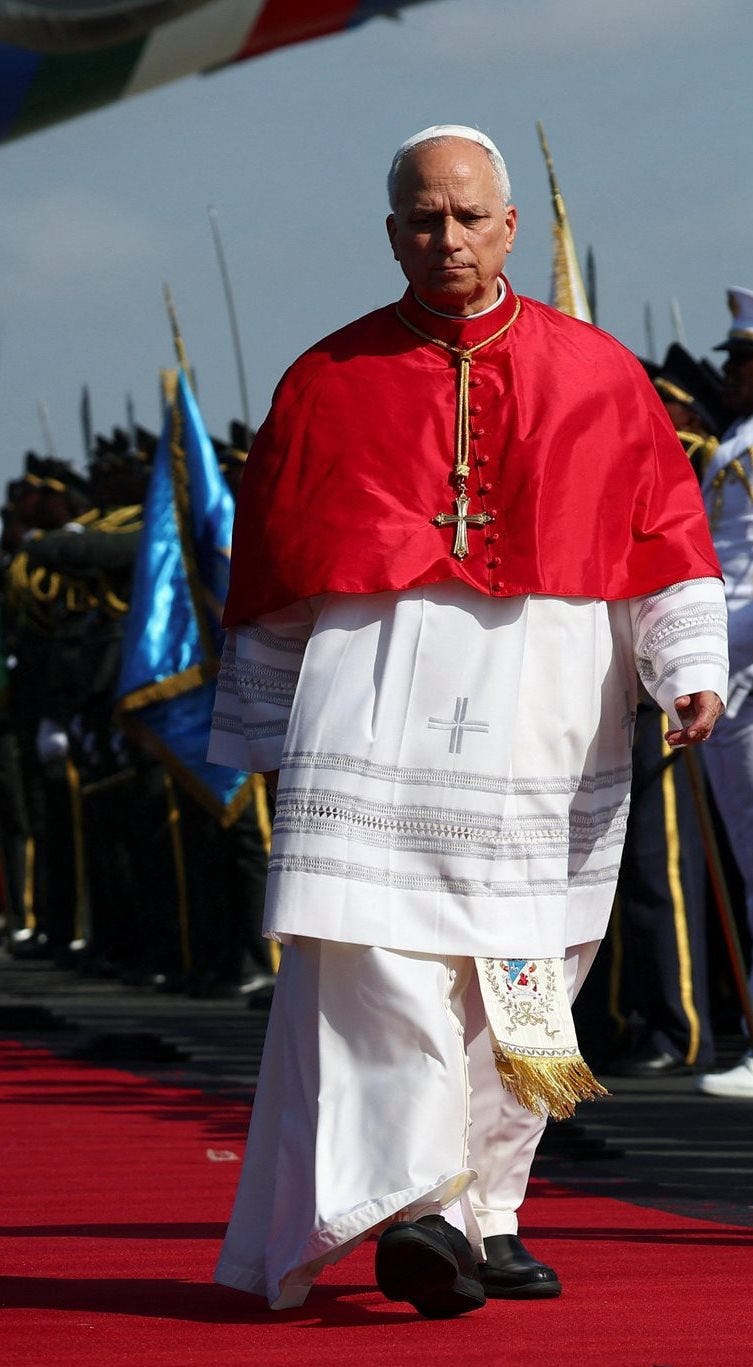
That has always been Leo’s goal: to visit the nations of Algeria, Cameroon, Angola and Equatorial Guinea as Pope, and also to bring the full force of Vatican diplomacy to assist the beleaguered Catholics in the various countries.
But in light of President Donald Trump’s bizarre social media attack on Leo the night before the voyage began, most media outlets have been racing to portray every word and action of the Pope as a response to the U.S. President.
Leo’s criticism of abuses of power and wealth? Reported as aimed at Trump. Leo’s messages calling for peace? Reported as a political dig at Trump. Any papal condemnation of war? Reported as a direct response to the Iran conflict. This was done by many secular outlets: especially those keen to use any opportunity to redouble their attacks against Trump and somehow claim Leo as a protagonist in the Democrat Party’s opposition to the president. But it was also shamefully carried out by some outlets and reporters describing themselves as Catholics.

Continue Reading at Pelican Plus.
Certainly, Leo has expressed his concern about the Iran conflict from the start, but not in any partisan mode. Instead he repeated the classic papal refrain of urging the world to pursue peace rather than bloody conflict.
When Trump threatened “civilization” wide destruction, which by definition involves massive loss of civilian life and would completely be in opposition to Catholic teaching about a just war, Leo upped his rhetoric. At this point he urged Americans to contact their representatives – not to make a political point or urge support for any party – but simply to ask said representatives to work to seek peace rather than an escalation of conflict. All this was before he embarked for Africa.
But the great mistake which the Western world makes is in thinking that simply because America is loud and powerful, that somehow the globe revolves around the U.S.A. For the Church and the Pope this is simply not true.
Leo made the rare move of directly rebuking those who had peddled such narratives – some of whom were on the plane seated in front of him when he issued his statement. “There has been a certain narrative that has not been accurate in all of its aspects, but because of the political situation created when, on the first day of the trip, the President of the United States made some comments about myself,” Leo said on Saturday. “Much of what has been written since then has been more commentary on commentary trying to interpret what has been said.”
The Pope had already said at the start of the voyage on April 13 that he had no fear of the Trump administration and would continue to proclaim the Gospel. On April 18 he reiterated his disconnect from politics, saying that it is “not in my interest at all” to try to “debate” with Trump.
Every speech is carefully prepared, mindful of the immense tension in certain countries, and as Leo himself attested – it is a work performed many weeks in advance. Not so, therefore, have his speeches been hastily composed rebuttals to Donald Trump.
Indeed those who seek to make the Africa voyage about Trump and America tragically overlook the weighty issues which Leo is seeking to address. He is visiting nations where there is a huge amount of abject poverty, despite wealth in natural resources; some, like Cameroon, are particularly beset by bloody civil wars and persecution from Islamist terrorists which have led to thousands of people slaughtered in recent years.
Additionally, Leo has deliberately sought to urge the young people to commit to a different style of life than the one they are growing up in. Visiting universities and speaking to the youth directly, Leo called on them to prioritize peace over bloodshed, and to stay in their home countries in order to contribute to the rebuilding of a better future.
As Pelican readers will be well aware, Leo’s very visit to Cameroon has already resulted in some welcome alleviation of fighting as the warring factions declared a ceasefire during his visit, and the logistical preparations necessitated the opening of areas which had been closed due to the fighting.
“Even if the Holy Father says nothing, his presence is a comforting one; his blessings bring peace, and his words come as a balm to the wounds of those who are bleeding,” said Cameroon’s Archbishop Nkea.
“We continue proclaiming the Gospel message,” said Leo about his second half of the Africa voyage. “The text of the Gospel we have been using for the liturgies give a number of different, fantastic, beautiful aspects of what it is about to be Christian, of what it is about to follow Christ, of what it is about to promote fraternity, brotherhood, trusting in the Lord, but also looking for ways to promote justice in our world, promote peace in our world.”
This he demonstrated on Sunday night when he led the Rosary at Mamã Muxima shrine in Angola, once the thriving hub of the trans-Atlantic slave trade. Addressing the young people present in the thronged crowds – the immense numbers of which have been a constant in the voyage – Leo urged them to turn to Mary as a guide for their own lives. “The Mother of Heaven entrusts a great project to you as well: to build a better, welcoming world, where there is no more war, injustice, poverty or dishonesty, and where the principles of the Gospel increasingly inspire and shape hearts, structures and programs, for the good of all.”
Leo also warned against the rise of superstition, something which is of notable concern in Africa and easily spreads into the practice of Catholicism. Superstition, he said in Angola on Monday, is when “God becomes an idol that is sought only when it is advantageous to us and only for as long as it is.”
Africa has a special place in Leo’s heart, and his visit there this week is a testament to that. He has not, nor will he, allow the narrative to be diverted away from his original aim.

👎 P+