

Militia in Cameroon’s bloody conflict have announced a pause in fighting during Pope Leo XIV’s visit to the country this week, while local bishops welcome the pope’s visit as a “sign of peace.”
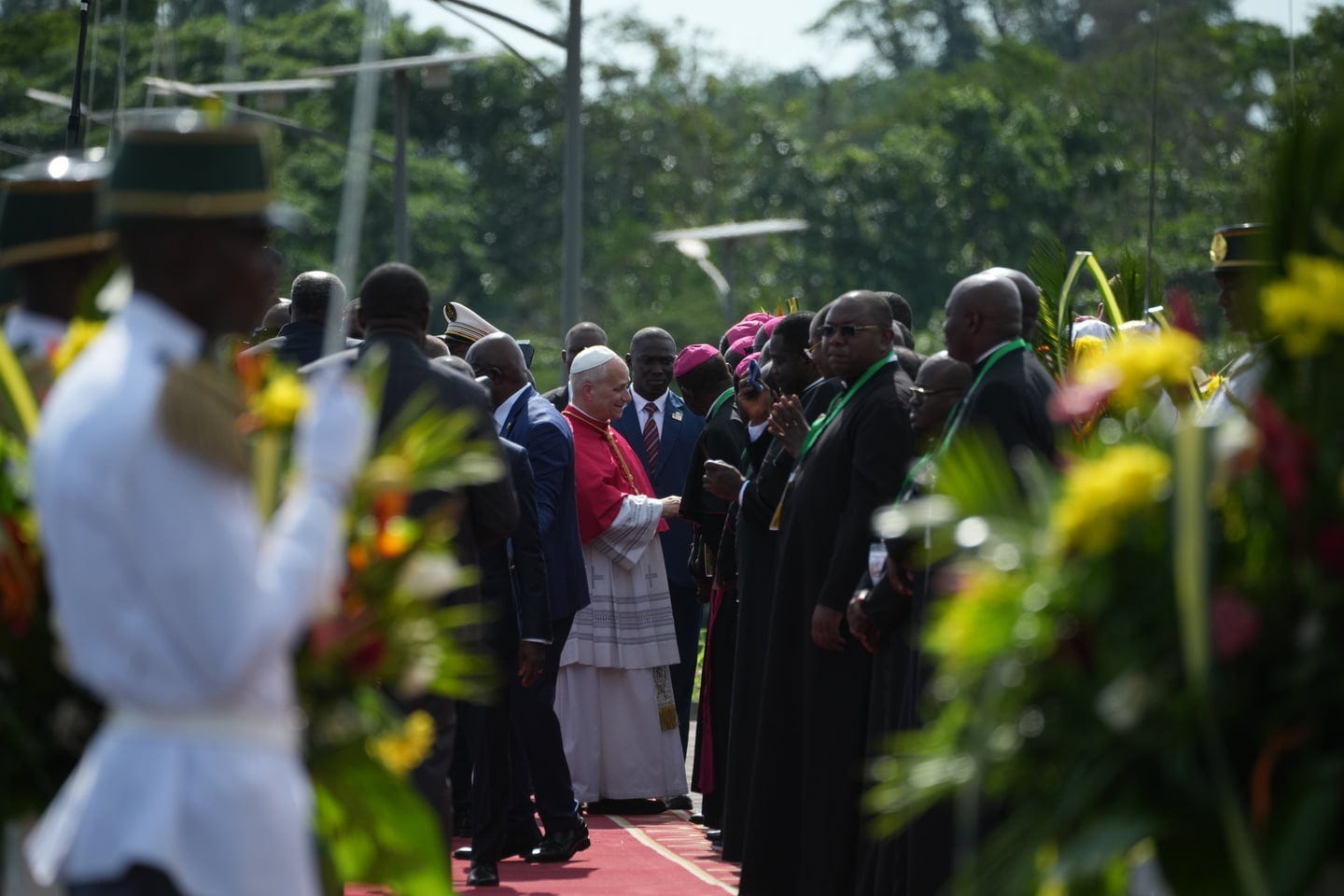
Late afternoon local time, Leo XIV touched down in Yaoundé-Nsimalen airport in Cameroon, starting a visit to the country which will last until Saturday, at which point he heads to Angola. Cameroon has seen a papal visit before, though not for many years. Pope John Paul II visited in 1985, followed by Benedict XVI in 2009.
“This papal visit is a sign of peace,” Bishop Emmanuel Dassi of the Diocese of Bafia told Aid to the Church in Need (ACN).
Leo will hold a certain number of events which are fairly standard for such a trip: meeting the nations’ political and diplomatic authorities, the Catholic bishops, students, and two public Masses.
He will also travel across the nation, taking four internal flights during his short visit.
Matteo Bruni, director of the Holy See Press Office, said of the entire, four-nation voyage: “It is a journey through the richness of this vast continent, home to diverse peoples and worlds.”
Catholics are estimated to number just under 25% of the 18 million strong population of Cameroon, according to a 2025 poll. Demonstrating the nation’s attachment to doctrine, Cameroon’s bishops emerged as some of the strongest opponents to Fiducia Supplicans. They issued a statement of nearly unmatched forthrightness in which the bishops declared “we formally forbid all blessing of ‘homosexual couples’ in the Church of Cameroon.”
The nation is officially secular, and though Christianity as a whole is the majority religion in the nation, ACN lists the country as a hotbed of Christian persecution due to “Islamist extremism.”
The Islamic group Boko Haram is especially active in the north of the country, spilling over from neighboring Nigeria, and latter years have also seen the rise of persecution at the hands of Islamic State West Africa Province. Some 3,000 people are estimated to have been killed at the hands of Boko Haram.
But it is the Anglophone crisis in Cameroon which has led to the most death and devastation so far, with more than 6,000 people killed and over a million displaced internally. With long reaching historical origins, the conflict erupted in 2017 between the French official government and the English speaking sectors of Cameroon. Protests by the English-speaking Cameroonians were clamped down on by the French-speaking government, leading to retaliatory guerrilla warfare and then increasingly severe responses by the state forces.


