

Leo XIV is continuing his predecessors’ opposition to the use of the death penalty, renewing his condemnation of it today as a violation of the “inherent dignity” of man.
Addressing a group of European politicians convened for a conference against organized crime, Leo XIV opined on the use of various measures for combatting the rise of crime and punishment of the criminal. Welcoming the participants of the conference to the Vatican, Leo stated:
“Recognizing that true justice cannot be satisfied with punishment alone, such efforts must likewise embrace approaches marked by perseverance and mercy, aimed at the re-education and full reintegration of offenders into the fabric of society. The same respect for the inherent dignity of every person, including those who have committed crimes, precludes the use of the death penalty, torture, and every form of cruel or degrading punishment.”

This is not the first time that Leo has come down in opposition to the death penalty. “Someone who says I’m against abortion but says I’m in favor of the death penalty is not really pro-life,” the American pope notably and controversially commented in late September, during one of his off-the-cuff meetings with the press outside Castel Gandolfo. Such was the controversy following his remarks and the wider issue of an award to the pro-abortion Sen. Dick Durbin, that Leo’s next few Tuesday press encounters were much more toned down.
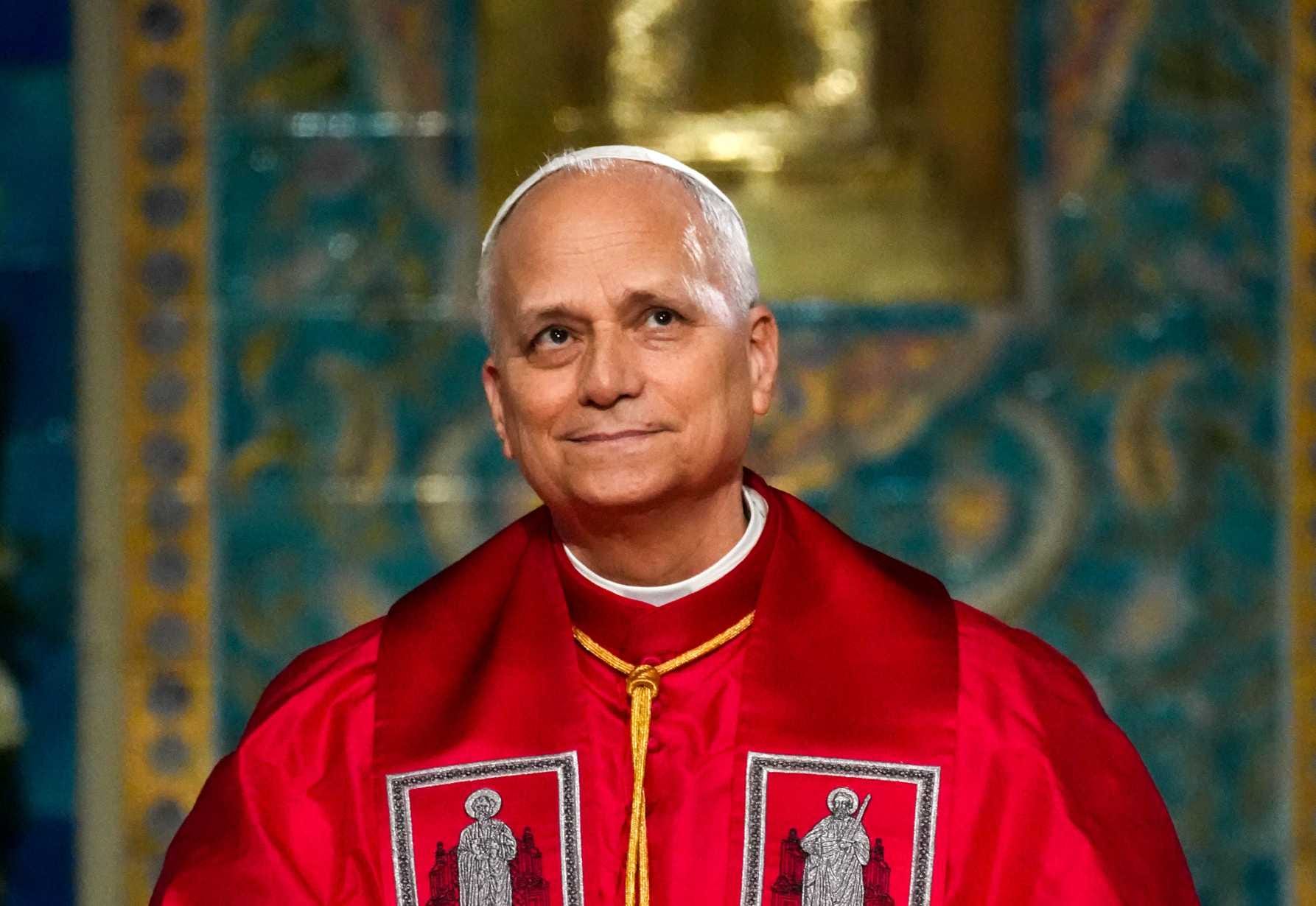
Nor is he forging a new path. Pope Francis infamously and repeatedly expressed his opposition to the death penalty, calling it “inadmissible.” He made revolutionary changes to Pope John Paul II’s and Cardinal Joseph Ratzinger’s catechism in 2018, declaring that the death penalty “is inadmissible because it is an attack on the inviolability and dignity of the person.”
Francis often repeated such statements, arguing that the death penalty is “always inadmissible since it attacks the inviolability and the dignity of the person.” The Argentine pope’s changes to the catechism were even cited by Cardinal Christoph Schönborn as evidence of potential future change regarding LGBT issues.
Pope Francis was a figure of division for many in the Church, but in numerous elements of his pontificate he was simply embellishing the thoughts and theological arguments of those before him, and often taking them to new levels.
Pope John Paul II made a number of appeals for the end to the death penalty, saying on one occasion in 1999: “I renew the appeal I made most recently at Christmas for a consensus to end the death penalty, which is both cruel and unnecessary.”
In his encyclical Evangelium Vitae, John Paul II wrote: “in the same perspective there is evidence of a growing public opposition to the death penalty, even when such a penalty is seen as a kind of ‘legitimate defence’ on the part of society. Modern society in fact has the means of effectively suppressing crime by rendering criminals harmless without definitively denying them the chance to reform.”
Pope Benedict XVI did likewise, writing in his 2011 post-synodal apostolic exhortation Africae Munus that: “I draw the attention of society’s leaders to the need to make every effort to eliminate the death penalty and to reform the penal system in a way that ensures respect for the prisoners’ human dignity. Pastoral workers have the task of studying and recommending restorative justice as a means and a process for promoting reconciliation, justice and peace, and the return of victims and offenders to the community.”
The difference between the position of John Paul and Benedict contrasted with that of Francis and Leo is that the former two wrote against the death penalty – even strongly urging it to cease in light of modern standards of punitive justice and rehabilitation – but did not declare it to be an evil in itself.
Francis, and Leo following suit, have declared the death penalty to be always inadmissible and thus a violation of human dignity.
Traditional teaching on the death penalty
The great consternation regarding Francis’ and Leo’s pronouncements against the death penalty per se, is due to the fact that such statements contradict the timeless teaching of the Church over centuries.
Tradition and Sacred Scripture have always attested to the licit nature of the punishment as scholars – such as Edward Feser and Joseph Bessette, joint authors of By Man Shall His Blood Be Shed: A Catholic Defense of Capital Punishment – have extensively pointed out. Feser wrote in 2019 that if Francis’ intention was to declare the death penalty as always evil, then it “would be a direct contradiction of Scripture, the Fathers and Doctors of the Church, and all previous popes, and thus would not be a true development of doctrine but a reversal or corruption of doctrine.” Francis consequently made a number of statements confirming Feser’s fears.
In the book of Genesis capital punishment is permitted precisely because murder violates man’s dignity as being made in the image of God: “whosoever shall shed man’s blood, his blood shall be shed: for man was made to the image of God.” (Gen 9:6) This teaching is further proposed by St. Thomas Aquinas, who drew from Scripture himself to teach that the common good is protected, and justice preserved, by observing the death penalty. (Summa Theologiae, 2a 2ae, q64, a2 & a3).
Dr. Peter Kwasniewski, who has written extensively on the late Pope Francis’ various statements against the death penalty, has commented how:
“It’s important to see not only that Francis is wrong, but that he is dangerously wrong, on this subject…when the pope is wrong about something that touches on the judicial and criminal systems of hundreds of nations and on the foundations and ramifications of their God-given authority, one is dealing with a level of wrongness that threatens the good of political society—the common good that Aristotle and Aquinas describe as something divine.”
Pushback is not limited to lay figures. Avery Cardinal Dulles stated in 2004 that “the reversal of a doctrine as well established as the legitimacy of capital punishment would raise serious problems regarding the credibility of the magisterium… [if] the previous teaching had been discarded, doubt would be cast on the current teaching as well.”

In the book-length interview Diane Montagna conducted with Bishop Athanasius Schneider – Christus Vincit: Christ’s Triumph over the Darkness of the Age – the auxiliary bishop taught that:
“Those who deny the death penalty in principle implicitly or explicitly absolutize the corporal and temporal life of man. They also deny to some extent the consequences of original sin. Those who deny the legitimacy of the death penalty also implicitly or explicitly deny the need and value of expiation and penance for sins, and especially for monstrous crimes still in this earthly life.”
Bishop Schneider further noted how:
“God Himself pronounced the first death penalty sentence after Adam and Eve committed the first sin, for through sin death entered the world…Therefore, if someone affirms that the death penalty is in se contrary to the Gospel, he accuses God Himself of being immoral, since God pronounced against Adam and Eve and He still pronounces the death penalty against every human being by the very fact of bodily death.”
Indeed, following Francis’ 2018 change to the Catechism on the death penalty, a group of clergy and lay scholars appealed to the cardinals urging them to tell the Pope to teach the true Catholic doctrine on the matter. The signatories noted that, far from being a teaching which can change with the times, the death penalty is “a truth contained in the Word of God, and taught by the ordinary and universal magisterium of the Catholic Church.”
Leo’s continuation of Francis’ language on this, rather than the style of John Paul II and Benedict, is concerning for the integrity of the Faith.

I would like to ask his holiness Pope Leo if he has heard of Charles Starkweather. Charles Starkweather was a serial killer that terrorized the state of Nebraska back in the late 1950s. he killed several people, including CLUBBING to death the half-sister, and shooting to death the step father and mother of his female accomplice. he dressed like James Dean, so his accomplice was very infatuated with him. he was rightly executed in the electric chair after he was finally caught. I believe his final victim count was something like 11. those type of people cannot be rehabilitated!
I’m a longtime pro-life Catholic and one who believes the death penalty is NOT “inadmissible.”