

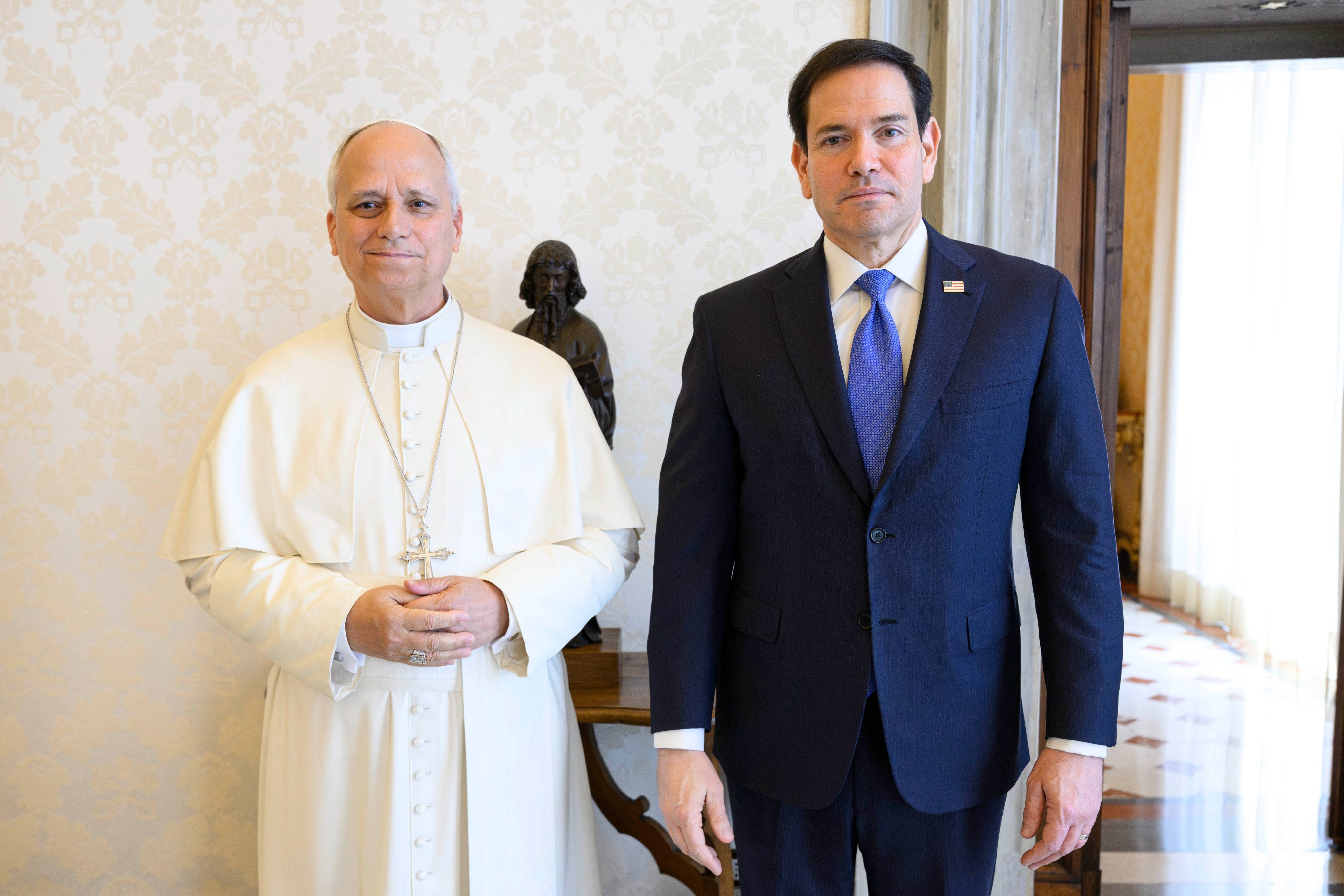
The Holy See and the Trump Administration welcomed a “cordial” meeting between Pope Leo XIV and U.S. Secretary of State Marco Rubio this morning.
Rubio’s visit to the Holy See comes after recent high-profile remarks by President Donald Trump attacking Pope Leo for his comments urging peace in the Iran war. As such, to many observers, the visit of the Secretary of State (himself a Catholic) is one designed to smooth the waters and further aid the work being done in that regard by the (also Catholic) U.S. Ambassador to the Holy See, Brian Burch.
Rubio met with Leo XIV on the morning of May 7, before then sitting down with Cardinal Secretary of State Pietro Parolin, as is customary for visiting heads of state or high-ranking politicians and officials.
A statement from the Holy See after the encounter described the event as “cordial,” during which “the shared commitment to fostering good bilateral relations between the Holy See and the United States of America was reaffirmed.”
“There was also,” the Vatican’s read-out continued, “an exchange of views on the regional and international situation, with particular attention to countries affected by war, political tensions, and difficult humanitarian situations, as well as on the need to work tirelessly for peace.”
The U.S. Embassy to the Holy See added that Rubio spoke with Leo XIV about “situation in the Middle East and topics of mutual interest in the Western Hemisphere,” stating that the meeting “underscored the strong relationship between the United States and the Holy See and their shared commitment to promoting peace and human dignity.”
It comes against the backdrop of criticisms lobbied against Leo by Donald Trump, amongst which Trump accused Leo of doing a poor job and of supporting crime. “I don’t think he’s doing a very good job. He likes crime I guess. He’s worried about fear,” wrote Trump in a social media post.
According to Trump, Leo was only elected to the papacy “because he was an American, and they thought that would be the best way to deal with President Donald J. Trump. If I wasn’t in the White House, Leo wouldn’t be in the Vatican.”
In response, Leo briefly told journalists on-board the papal voyage to Africa that “I have no fear of the Trump administration, nor speaking out loudly about the message of the Gospel.”
Since then, Trump has issued fresh criticism of the Pope, but Leo has responded by renewing his calls for global peace and repeating the Church’s opposition to nuclear arms.
Commenting on the meeting beforehand, Parolin said that the request came from Rubio, thus dispelling any ideas that the Holy See had somehow summoned the Secretary. “We will discuss everything that has happened in recent days,” said Parolin on Wednesday, ahead of the meeting. “We simply cannot avoid these topics.”
Hosting a White House press briefing before his trip, Rubio revealed the visit had been planned prior to Trump’s recent remarks, saying: “it’s a trip we had planned from before, and obviously we had some stuff that happened, and – no, look, there’s a lot to talk about with the Vatican.”
The Secretary stated that the U.S. and the Holy See “have shared concerns about religious freedom, religious freedom in different parts of the world,” along with their collaboration with the Church to distribute humanitarian aid in Cuba.
As for Trump’s comments regarding the Pope, Rubio sought to diffuse the rhetoric, saying instead “the President – and I, for that matter; I think most people – I cannot understand why anyone would think that it’s a good idea for Iran to ever have a nuclear weapon.”
Early reports emerging from the meeting suggest that Rubio’s discussion with Leo was indeed cordial as described. Attention will now be paid to Trump’s rhetoric concerning Leo and the Church, especially to see whether the President decides to respond to any future calls for peace which the Pope will likely make when leaving Castel Gandolfo next Tuesday on his weekly visit.

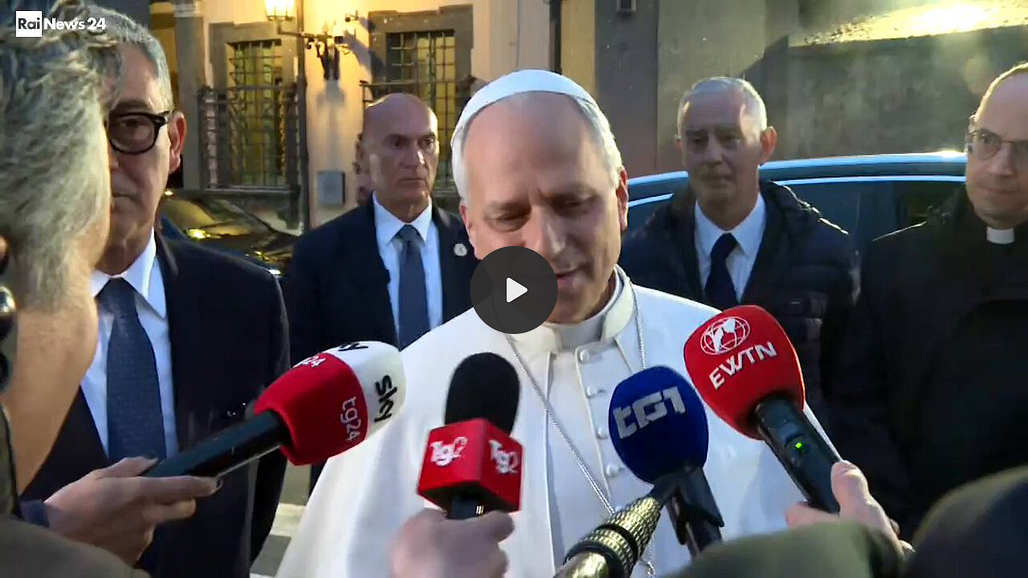
Speaking prior to Thursday’s meeting, Cdl. Parolin said that the Holy See had no fresh proposals to make regarding the Iran war, other than that which it had already suggested – namely dialogue. “These conflicts cannot be resolved by force, but must be addressed and resolved through negotiation,” said the Vatican Secretary of State. “It must be a negotiation of goodwill, sincere, so that all parties can express their point of view and find common ground.”
Cardinal Gerhard Müller – emeritus prefect of the Congregation for the Doctrine of the Faith, and a great lover of America – was of the view that Rubio’s visit was the only option for Washington, if the Trump administration wished to smooth the waters.
“I simply think they have no alternative. The United States cannot be against the Pope and the Vatican; a compromise is necessary,” he told Corriere della Sera on Tuesday. “It is also a matter of prudence; there are more than fifty million Catholics in the U.S. who certainly did not appreciate the attacks on the Pope. Politicians must be more diplomatic, more reasonable.”
Müller defended Leo’s response to the global conflicts stating that the “Church’s position is very clear in invoking the higher values of peace, beyond politics and above it. Of course, the U.S. is a great democracy and a military power, and may feel it has a role to play for peace, the responsibility to contain authoritarian and dangerous regimes. But the end does not justify all means.”
The respected German prelate roundly slated Christians who “invoke divine protection over wars,” attesting that such individuals are “exploiting politics to advance their religious vision. They use the state to assert their theological views, just like in theocracies. And that’s much worse: abusing God’s name to impose their own theories.”
Connect with the author on Pelican+ Social

