

When listening to a homily during Mass, have you ever gotten the impression that the priest struggles to come up with content for his homilies? Perhaps his points seem strained, or the delivery seems meandering, as if the preacher is not certain of what idea he is trying to convey. Or you may hear a preacher who frequently reaches outside the Scriptures for content, always making allusions to sports, cinema, or literature to pad his homilies.
Listen to the Sunday Sermon Series on Pelican+
There are many explanations for a poor homily, like an obtuse scriptural passage or a priest being too busy in general. And some priests are just not great at public speaking. Even so, I have come to strongly suspect that many priests have a hard time figuring out what to preach on. I get it. As a writer working in the Trad Catholic space for nigh on twenty years, I have run up against the same problem. What can you say that hasn’t been said before? How can you keep your ideas and presentation fresh over such an extended period? What do you do when you’re just not feeling it?
Now the benefit of being a lay blogger is if I don’t have anything to say, I just…don’t write for awhile until inspiration returns. Priests who are obliged to preach on all Sundays and Holy Days have no such luxury. I should also note that, while the daily homily is canonically optional, a priest who habitually exercised his right to not preach weekday homilies would certainly hear from the diocesan chancery. The reality is that daily preaching is a normative expectation for parish priests. Today’s priest is expected to preach more than his predecessors of previous generations.
With priests expected to preach more than ever before and many apparently struggling with formulating their homilies, why not return to a source that has inspired generations of homilists throughout the Church’s history? I am referring to the lives of the saints.
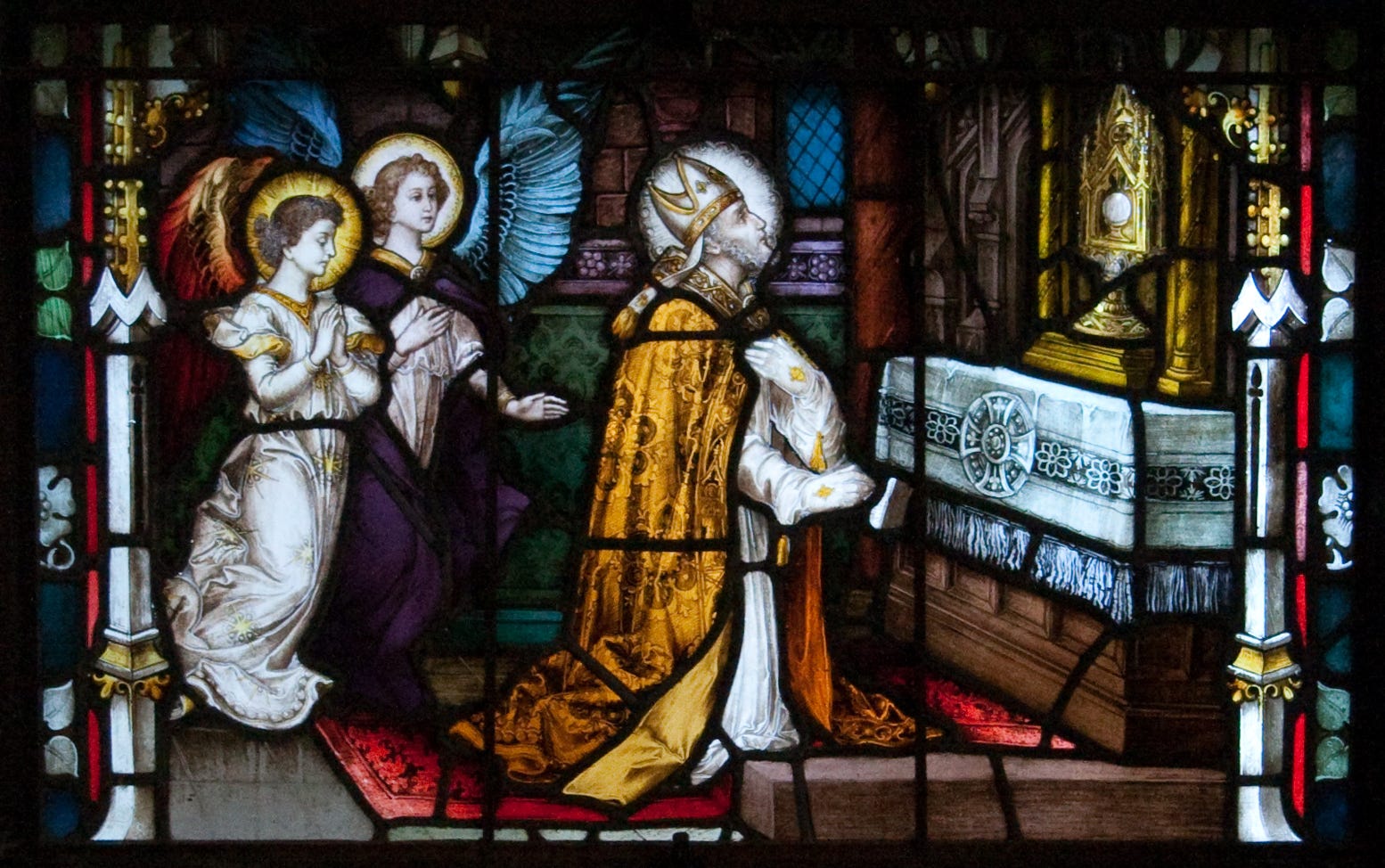
Some years ago I read Sermons for All Sundays of the Year by St. Alphonsus Ligouri, one of the Church’s greatest preachers. This is a collection of St. Alphonsus’s homilies for every Sunday and Holy Day of the liturgical year. I remember being surprised by how deeply Alphonsus drew on the lives of the saints in his preaching. In fact, every sermon was chock-full of quotations, anecdotes, and allusions to the saints. For example, in his homily for the Second Sunday in Lent (on Matthew’s account of the Transfiguration), St. Alphonsus is discussing St. Peter’s comment “Lord, it is good for us to be here” (Matt. 17:4). He uses the passage as an occasion to discourse on the superiority of spiritual happiness over temporal pleasures. Below is a brief excerpt of the homily; note how skillfully Alphonsus weaves the lives of the saints into his preaching:
The delights of the soul infinitely surpass all the pleasures of the senses. Even in this life divine love infuses such sweetness into the soul when God communicates himself to her, that the body is raised from the earth. St. Peter of Alcantara once fell into such an ecstasy of love, that, taking hold of a tree, he drew it up from the roots, and raised it with him on high. So great is the sweetness of divine love, that the holy martyrs, in the midst of their torments, felt no pain, but were on the contrary filled with joy. Hence, St. Augustine says that, when St. Lawrence was laid on a red-hot gridiron, the fervour of divine love made him insensible to the burning heat of the fire: “Burned by its fire, he does not feel the burning.” Even on sinners who weep for their sins, God bestows consolations which exceed all earthly pleasures. Hence St. Bernard says: “If it be so sweet to weep for thee, what must it be to rejoice in thee!” 1

