By Brian McCall
Much was written about the startling interviews given by Pope Francis during his long pontificate and much more could be said about them. Yet, rather than dwelling on the myriad of troubling details, I want to examine a core philosophical belief which undergirds much of what Pope Francis said, and presumably believed. It has long been my contention that the grave crisis in the Church, the crisis of Modernism, is not so much that utterly false principles are urged upon the faithful but rather the due order and priority among true principles is disregarded and in fact inverted. When the Modernist crisis is evaluated from the hindsight of history, I believe it will show that one can do much more harm than a Luther or Calvin who simply established false principles, by advocating an erroneous priority of true principles. In this article we will consider how the inversion of the proper order of true principles concerning the end of Man leads to disaster.
To demonstrate the need for priority of true principles we can begin by resolving an apparent paradox in two editions of the Baltimore Catechism. There are two answers to the question “why did God make us?” One is that “God made us to show forth His goodness and to share with us His everlasting happiness in heaven.” (Baltimore Catechism 1941 edition). The second is “God made us to know, Him, to love Him, and to serve Him.” (Baltimore Catechism 1921 edition). Both of these statements are true but to be fully and properly understood they must be placed in a proper order. To understand this order we can turn to the Greek philosopher Aristotle.
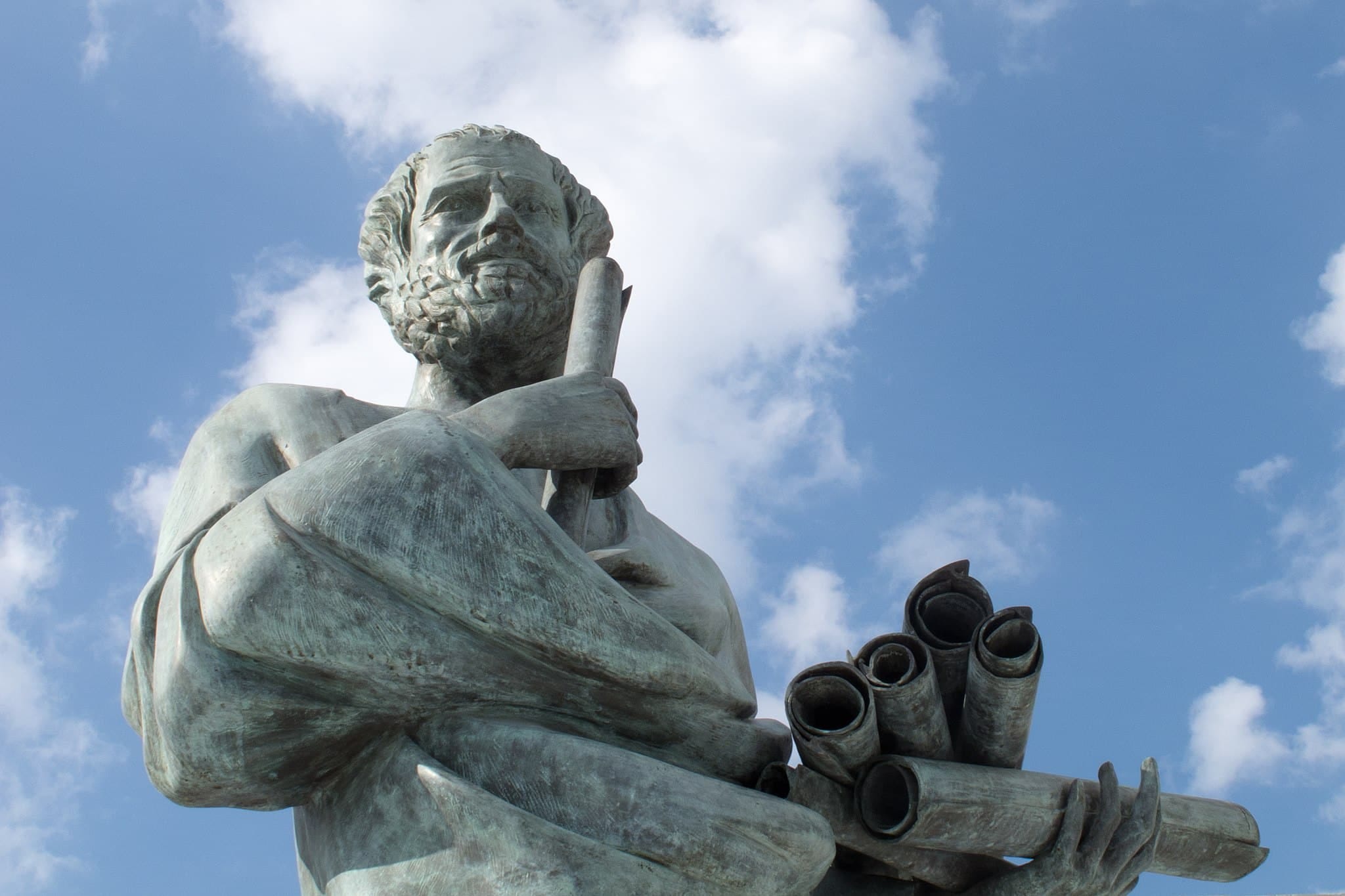
Aristotle argued that all Men act with an end or purpose in mind. There are, however, different kinds of ends, intermediate and ultimate. An intermediate end is an end, a completion of action, but one which is not done for its own sake but for the sake of another end. An ultimate end is an end sought simply for its own sake. The question “for what sake is that end achieved?” has no meaning with respect to the ultimate end. A simple analogy can help illustrate the point. If I am cooking food, my end is to prepare dinner. Yet, I am not preparing dinner for its own sake. I am preparing it for the end of eating it. The fact that I can ask why I am eating the dinner (to avoid starvation and death) proves that eating dinner is itself an intermediate end.
Returning to the Catechism, Man is created for the end of knowing, loving and serving God in this life to be happy in the next. Yet, this is not the ultimate end of Man. This is only his end because he was created in the first place. Thus, we can ask why did God create Man having such a particular end? The answer to this question is the other answer to the Catechism question. God created Man (including the creation of the end of knowing, loving, and serving Him) so to show forth his goodness and share his happiness. This is the ultimate end of Man; the reason for which the end of knowing, loving and serving God exists. As St. Thomas explains “God produced the being of all things, not by natural necessity, but by his intellect and will. His intellect and will can have nothing for an ultimate end other than His own goodness, which He communicates to things. Things participate in Divine goodness through similitude, insofar as they are themselves good. But what is best in created things is the good of the order of the universe, which is the most perfect, as the Philosopher says (XII Metaphysics, c. 10); this is also in accordance with Holy Scriptures, where it is said: And God saw all that He had made, and it was very good. (Gen. I, 31), whereas of the works of creation taken separately He had simply said that they were good. Consequently, the good of the order of things created by God is also the principal object of the will and intention of God. But to govern a being is none other than to impose an order upon it.... That which makes the particular end of each Man to know, love and serve God to be good is that this particular end is ordered to the manifestation of God’s goodness through the created universe. There is an important principle that lies behind this ordering of ends. The ultimate end is understood from God’s perspective. It is a cosmological end; an order and purpose to the universe. The intermediate end is from Man’s perspective. It is an end of each person’s individual existence. Yet, this individual personal end must be subject to the ultimate end of manifestation of God’s goodness (and especially his charity in desiring to share His happiness). The personal end of each Man is a part of the overall end common to all creation. We maintain this necessary order only by understanding the end of each person in its dependent relation to the end of God’s creation.