

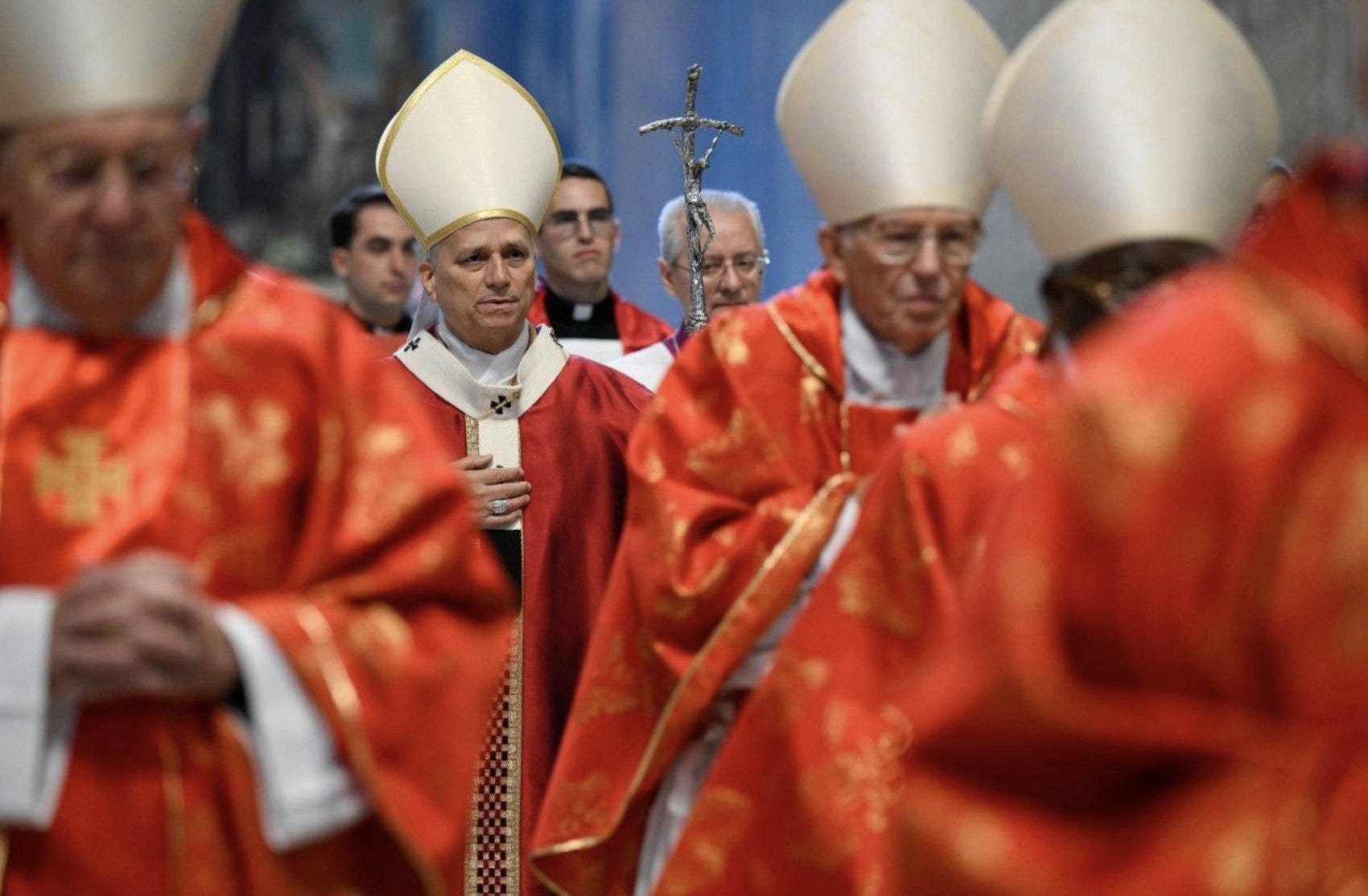
Pope Leo XIV is meeting with the College of Cardinals again this June. The second extraordinary consistory of this pontificate. It’s a clear contrast with Francis, who prevented the college from meeting and freely speaking after 2014, and a response to complaints from cardinals about this during the conclave. What can be expected this time? Maybe not too much. Maybe just moderate governance and consultation with the world’s cardinals. To understand this, context is key.
The first consistory was a mess. Four topics and not enough time so the cardinals had to pick two, flawed communication with the cardinals leading up to it and finally, complaints about the use of the synodal group format during parts of the consistory, rather than cardinals simply addressing the full plenary assembly, as was the norm before Francis. Only some cardinals were able to speak during the plenaries which were brief. This resulted in some suspicion that the consistory was being manipulated the way synods had been under Francis. Questions were raised whether Pope Leo himself and/or holdover figures tied to Francis were behind this.
Yet, no manufactured pretend consensus in favouring of furthering or consolidating progressive reforms emerged. In fact, one of the topics that the majority of cardinals shelved, the liturgy, has since been unilaterally addressed by Pope Leo and in a conservative way. He has encouraged the French bishops to be more inclusive towards the Tridentine mass and Catholics attached to it. This showed both that he has no desire to consolidate or enforce Traditionis Custodes, and that he is not planning on being a mere primus inter pares who follows the will of the majority of cardinals.

Continue Reading at Pelican Plus.
Similarly, Pope Leo unilaterally proceeded on another issue: curial reform. He has exiled several protégés of Francis and started to import more conservative and institutionalist figures to serve in the Secretariat of State and as curial prefects.
Because of all this it seems unlikely that Pope Leo is secretly progressive and hoping to push progressive reforms with these consistories. This does not exclude the possibility that progressive holdovers pushed the synodal format, because they hoped to influence the conversation. Perhaps they were merely trying to contain or delay reactionary pushback.
I was also informed by a reliable source that the plenary format simply doesn’t work very well and that many cardinals would actually prefer the current format. Therefore, this might not be a real victory for progressives at all. After Francis, rumours and suspicions will only go away slowly and we can expect some alarming gossip, but it seems increasingly unlikely these consistories will in any way mirror the synods under Francis. For one thing, Pope Leo seems to have wanted to deal with the limitations of the first consistory, both by holding the second one so quickly and by ensuring there is more time. Secondly, the topics that will be focused on seem more streamlined and less controversial.
Pope Leo seems to have moved from big headline topics to a focus on (his conservative interpretation of) Francis’ Evangelii Gaudium. The first real document by Francis, it was one of his least controversial ones (despite a few dubious parts that hinted at more radical reforms that would be pushed later) and it can be more easily used to give a conservative spin to Francis’ pontificate. Pope Leo appears to be doing just that. In his communication to the cardinals, he spoke of what had not yet been properly implemented of the document after all these years, thereby treating it as ineffectual. He wants to focus on improving Catholic initiation, yet this has a rather weak basis in the document itself and appears to be more Pope Leo pushing his own priorities unto the document. As Evangelii Gaudium was part of a focus on New Evangelization and had a basis in the 2012 synod of bishops dealing with New Evangelization that was held by Pope Benedict XVI and which then Prior General Prevost partook in, this is a logical way for Pope Leo to return to the orthodoxy of Pope Benedict without undermining Francis too openly. It suggests Pope Leo has a clear agenda and he might be trying to win over moderate Francis supporters to it.
The fact that Pope Leo has decided to meet with the presidents of episcopal conferences in October to discuss Amoris Laetitia, rather than with the College of Cardinals, further supports the emerging picture that he is a decisive leader who wants to be less despotic and more collegial than Francis, but also not too strongly bound to the current college, that was shaped so heavily by the late Argentinian pontiff. Not all controversial topics will be dealt with at these consistories.
Pope Leo wants to engage in genuine listening and consultation, and he doesn’t like to blindside bishops or cardinals, but he seems to feel no need to manufacture a pretend consensus.
Pope Leo doesn’t seem to use these consistories to signal massive support towards the outside world. He prevented the first consistory from becoming a media circus. This one might be little different. Consistories under Pope Leo generally might return to what such meetings were before Francis, a dull and boring affair. Progressive cardinals might float more radical ideas during the consistory but even many of Francis’ own cardinals will likely be apathetic.
This doesn’t mean important topics will be entirely absent from deliberations, though. Since Pope Leo wants to focus on evangelization and has a more realistic view of the Tridentine mass, there is a strong possibility he’ll promote and normalize the old mass as a means to convert people. When the majority of cardinals, if not a supermajority, will support this, or are at least neutral, opponents of the Tridentine Mass will discover just how isolated and powerless they are.
In the end, what can perhaps be expected most of all, is a return to normalcy.
From your lips to God’s ear. I remain skeptical, with perhaps a suspicion of hopefulness. Personnel is policy and in that respect this pontificate is, so far, not particularly encouraging.
When Rome releases a list of the next slate of new Cardinals, that’s when we shall get a clearer picture of what this pontificate is all about.
Personally, I believe that until Traditiones Custodes is renounced and abrogated it will always be a sword of Damocles hanging above every Latin Mass community. Simply declining to enforce it isn’t enough—
that unhinged, unjust decree must be repudiated and the place where it stood sown with salt so it may never return.